
Boca Raton Pre-Hurricane Season Home Walkthrough Checklist
Learn how to conduct a thorough pre-hurricane season walkthrough on your Boca Raton home to catch vulnerabilities before tropical storms hit South Florida.
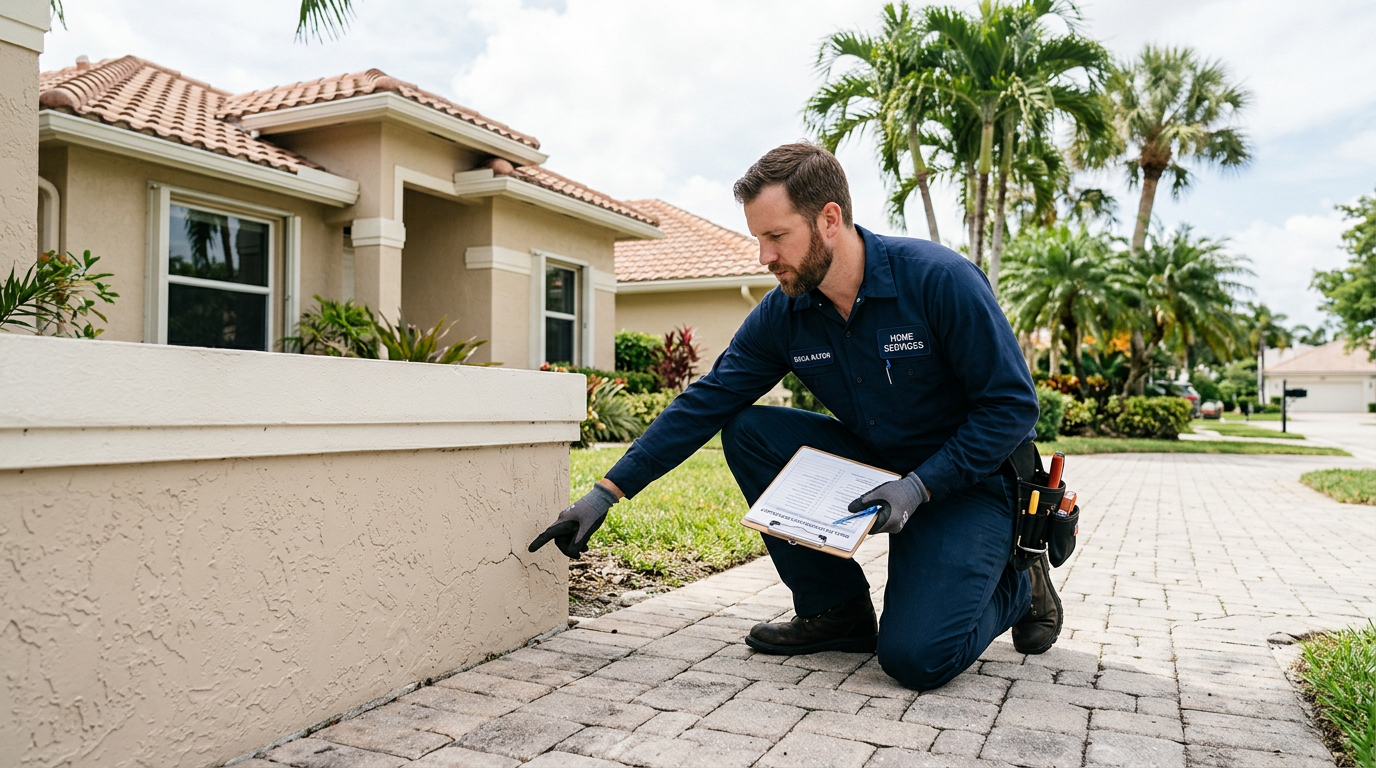
A professional pre-hurricane home walkthrough in Boca Raton costs between $150 and $350, depending on your property's square footage, roof height, and outbuildings. Handling minor pre-storm repairs—such as sealing hairline stucco cracks, replacing worn door weatherstripping, and securing soffit panels—typically ranges from $200 to $850 prior to June 1st. Catching these vulnerabilities before tropical weather arrives prevents severe wind-driven rain intrusion and structural water damage.
The Boca Raton Climate Clock: Why May Is Your Critical Window
South Florida follows a strict meteorological pattern. The dry winter and early spring months transition rapidly into the summer rainy season by mid-May, closely followed by the official start of the Atlantic hurricane season on June 1st. For homeowners across Boca Raton—from the established single-family neighborhoods of Boca Falls and Mission Bay to the luxury estates in Royal Palm Yacht & Country Club—waiting until a named storm enters the Bahamas is a recipe for disaster.
Once a hurricane warning is issued, local hardware stores run out of supplies, and handyman schedules fill up instantly. Performing a comprehensive walkthrough during May allows you to identify structural weakness, address deferred maintenance, and place orders for replacement hardware or custom materials while lead times are still manageable.
Furthermore, Boca Raton homes feature specific architectural components—such as concrete block construction (CBS), exterior stucco, aluminum screen enclosures, and heavy concrete barrel tile roofs—that require tailored inspection routines. Wind-driven rain during a summer severe thunderstorm can generate pressures equivalent to a minor tropical storm, easily finding every hidden breach in your home's exterior.
Step 1: The Exterior Building Envelope
Your home’s building envelope is its first line of defense against 100+ mph winds and horizontal rainfall. In South Florida, water damage often starts long before structural failure occurs.
Stucco, Paint, and Exterior Walls
Concrete block structures are sturdy, but stucco is porous. Over time, heat expansion, ground settling, and salt-laden ocean air create micro-fissures in stucco surfaces.
- Inspect Hairline Cracks: Walk the full perimeter of your home. Examine windowsills, corners, and areas around hose bibs. Any crack wider than a credit card edge permits water to seep into the concrete block, deteriorating steel rebar and bubbling interior wall finishes.
- Check Paint Integrity: Paint on CBS walls acts as a waterproofing membrane. Look for chalking, peeling, or fading paint. If you notice signs of surface decay, schedule timely wall prep and painting services before heavy tropical rains begin.
Roof, Soffits, and Fascia
While complete roof inspections should be performed by licensed roofing contractors, a ground-level and ladder-top check of your roof line reveals critical security issues.
- Fascia and Soffit Panels: Look up at your aluminum or vinyl soffit panels. High winds create tremendous uplift pressure beneath roof overhangs. Missing, loose, or rotted soffit panels give storm winds a direct entry point into your attic space.
- Tile Alignment: Use binoculars to inspect barrel or S-tile roofs. Cracked, slipped, or loose tiles can become dangerous airborne projectiles during a storm.
- Drip Edge Sealing: Ensure the metal drip edge along your fascia is securely attached and sealed tightly against the roofing underlayment.
Openings: Windows, Doors, and Garage Seals
Windows and doors represent the primary envelope breach risk during a major wind event.
- Impact Window Tracks and Seals: Even if you have high-impact glass, clear weep holes at the bottom of window frames. Clogged weep holes force driven rain back into interior sill tracks and down into your drywall. If tracks are binding, address minor frame adjustments through window repair.
- Exterior Entry Doors: Check the rubber threshold sweeps and weatherstripping on all exterior doors. Sunlight degrades weather seals rapidly in Palm Beach County. If you see daylight around your front door or side garage door, water will enter under hurricane-force pressure. Request door repair to replace degraded weatherstripping and adjust strike plates so doors latch securely.
- Garage Door Bottom Seal: Garage doors are major structural failure points during severe wind events. Check that the bottom rubber gasket creates a tight seal against the slab to block street flooding and wind pressure.
Key takeaway: Water damage during South Florida storms is rarely caused by broken glass alone; wind-driven rain routinely penetrates compromised stucco cracks, worn door sweeps, and clogged window weep holes.
Step 2: Perimeter Structures, Drainage, and Outdoor Living
Exterior structures and drainage systems dictate whether water flows away from your foundation or pools against your home's exterior walls.
Fencing and Gates
Fences take a beating during tropical events. A single weak post can cause an entire fence line to collapse under sustained 60-mph gusts.
- Post Rot and Wobble: Push firmly against every 4x4 or 6x6 fence post. In coastal soil, moisture and ground termites degrade wooden posts below ground level. Reinforced PVC fence posts can also loosen in saturated sandy soil.
- Gate Latches: Ensure all gate hardware latches firmly. Unsecured gates swinging wildly in high winds frequently destroy surrounding stucco walls and neighbor property. Schedule prompt fence repair to secure loose posts and latching assemblies.
Lanai Screens and Patio Enclosures
Aluminum pool cages and screen lanais are standard in Boca Raton communities like Woodfield Country Club and Boca West. However, their large surface area catches extreme wind loads.
- Spline & Mesh Check: Inspect screen panels for fraying or loose rubber spline. Replacing torn mesh panels before storm season allows wind to pass through cleanly, relieving destructive pressure on the structural aluminum skeleton.
- Anchor Bolts: Check the stainless-steel tapcons anchoring your screen enclosure to the concrete deck. Rusted or sheared anchor bolts drastically reduce the enclosure's wind resistance.
Gutters, Downspouts, and French Drains
South Florida rain showers drop multiple inches of water in minutes. Rain gutters must process high volume efficiently to direct water away from foundation footings.
- Clear Debris: Clean oak leaves, pine needles, and palm fronds from gutter troughs and downspout elbows.
- Pressure Wash Silt: Heavy silt accumulation in gutters retards water flow. Utilize professional pressure washing to clear downspouts, driveways, and drainage channels before rain season peaks.
- Splash Blocks and Extensions: Verify downspouts discharge water at least three feet away from exterior CBS walls to protect perimeter foundations.
Key takeaway: Reinforcing loose fence posts and replacing torn lanai screen panels prior to June reduces wind resistance and prevents expensive structural collapse during summer blow-throughs.
Step 3: Interior and Attic Vulnerabilities
What happens inside your home during a storm depends heavily on the integrity of your interior structures and attic access.
Attic Space and Ceiling Visual Checks
- Inspect After Heavy Rain: Access your attic space before severe weather season kicks into gear. Look for dark water stains on roof plywood, wet insulation, or daylight shining through flashing transitions.
- Drywall Stains: Look at upper ceiling corners inside living spaces. Discolored rings indicate existing roof or soffit leaks. Resolving ceiling issues with drywall repair prior to hurricane season helps ensure minor leaks don't transform into full ceiling collapses when pressurized rainfall hits.
Fixture and Hardware Security
- Ceiling Fans: High-speed storm winds penetrating a compromised window or door create intense interior air turbulence. Ensure all ceiling fans on open lanais and interior rooms are securely mounted to heavy-duty junction boxes.
- General Maintenance: Complete ongoing home upkeep by staying on top of routine property maintenance tasks around doors, light fixtures, and hardware locks.
Boca Raton Pre-Hurricane Maintenance & Repair Costs (2026)
Addressing repair items discovered during your May walkthrough ensures your home is structurally ready. Below is a breakdown of realistic 2026 pricing for common pre-hurricane maintenance and repairs in Boca Raton and Palm Beach County:
| Service / Repair Task | Estimated Cost Range (2026) | Typical Timeline | Primary Protection Benefit |
|---|---|---|---|
| Pre-Storm Home Walkthrough Inspection | $150 – $350 | 1.5 – 3 Hours | Identifies hidden leaks, seal failures, and structural points |
| Exterior Door Weatherstripping & Latch Repair | $175 – $350 | 1 – 2 Hours | Prevents wind-driven water intrusion at door thresholds |
| Fascia / Soffit Repair & Securing | $250 – $600 | 2 – 4 Hours | Keeps wind from entering roof structure & tearing off panels |
| Stucco Sealing & Micro-Crack Patching | $200 – $500 | 2 – 5 Hours | Prevents saturation of CBS block walls and interior drywall rot |
| Fence Post Reinforcement & Latch Replacement | $225 – $650 | 2 – 4 Hours | Prevents fence failure & windborne debris damage |
| Lanai Screen Spline & Panel Replacement | $150 – $400 | 1 – 3 Hours | Relieves wind load pressure on aluminum patio enclosures |
| Window Track Clearing & Latch Repair | $150 – $300 | 1 – 2 Hours | Ensures proper water drainage through exterior weep holes |
Navigating Boca Raton HOA Regulations and Florida Building Code
When preparing a Boca Raton property for storm season, local regulations and Homeowners Association (HOA) covenants play a major role:
- Hurricane Shutter Deployment Rules: Most Boca Raton HOAs—including gated developments along the Lyons Road and State Road 7 corridors—strictly limit when hurricane shutters can be closed. Typically, shutters may only be lowered 48 to 72 hours before a predicted tropical storm event and must be taken down within 7 to 14 days following the storm.
- Shutter Hardware Maintenance: Because you cannot leave shutters permanently closed, you must ensure track systems, wing nuts, and panel anchors are lubricated and functional. Rusted shutter tracks are a primary cause of failed pre-storm preparation.
- Debris Disposal Guidelines: Trim trees and clear lawn debris early in May. Palm Beach County Solid Waste Authority (SWA) and city collection routes pause vegetative waste pickup once a hurricane watch is declared. Piles of branch trimmings left along the curb before a storm become hazardous flying projectiles.
- High-Velocity Hurricane Zone (HVHZ) Standards: Coastal Palm Beach County falls under stringent building codes. Any permanent exterior alterations, door replacements, or window modifications must meet strict wind load standards. Working with a licensed handyman service ensures repairs adhere to local building guidelines.
Taking time in May to perform a systematic, room-by-room, and exterior walkthrough gives you total peace of mind before the peak of South Florida's hurricane season.
Get a free estimate
Don't wait until tropical storm warnings are issued to secure your home. Contact Palm Handyman today to schedule your pre-hurricane property walkthrough or to complete needed repairs before storm season arrives.
Call us directly at (561) 299-0890 or book your appointment online at /book.
Need a handyman in Palm Beach County?
Get a free written estimate in minutes. Same-day appointments available across PBC.
Related services
Frequently asked questions
Most jobs start at $95 for the first hour with transparent flat-rate pricing on common tasks like TV mounting ($129), ceiling fans ($149), and drywall patches ($95). You'll always get a clear quote before any work begins — no hidden fees.
Yes. We reserve same-day and next-day appointments across Boca Raton, Delray Beach, Boynton Beach, West Palm Beach, Palm Beach Gardens, Jupiter, Lake Worth, and Wellington. Call us before noon for same-day availability.
Absolutely. Palm Handyman is fully licensed in Florida and carries $2M general liability plus workers' comp on every technician. We'll send the COI directly to your HOA or property manager on request.
We cover all of Palm Beach County including Boca Raton, Delray Beach, Boynton Beach, West Palm Beach, Palm Beach Gardens, Jupiter, Lake Worth, Wellington, Palm Beach Island, Manalapan, and Highland Beach.