
Boynton Beach DIY Electrical Safety: Code Rules & Pro Costs
Explore which electrical home projects in Boynton Beach require a licensed pro under Florida code, HOA guidelines, safety risks, and clear local 2026 pricing.
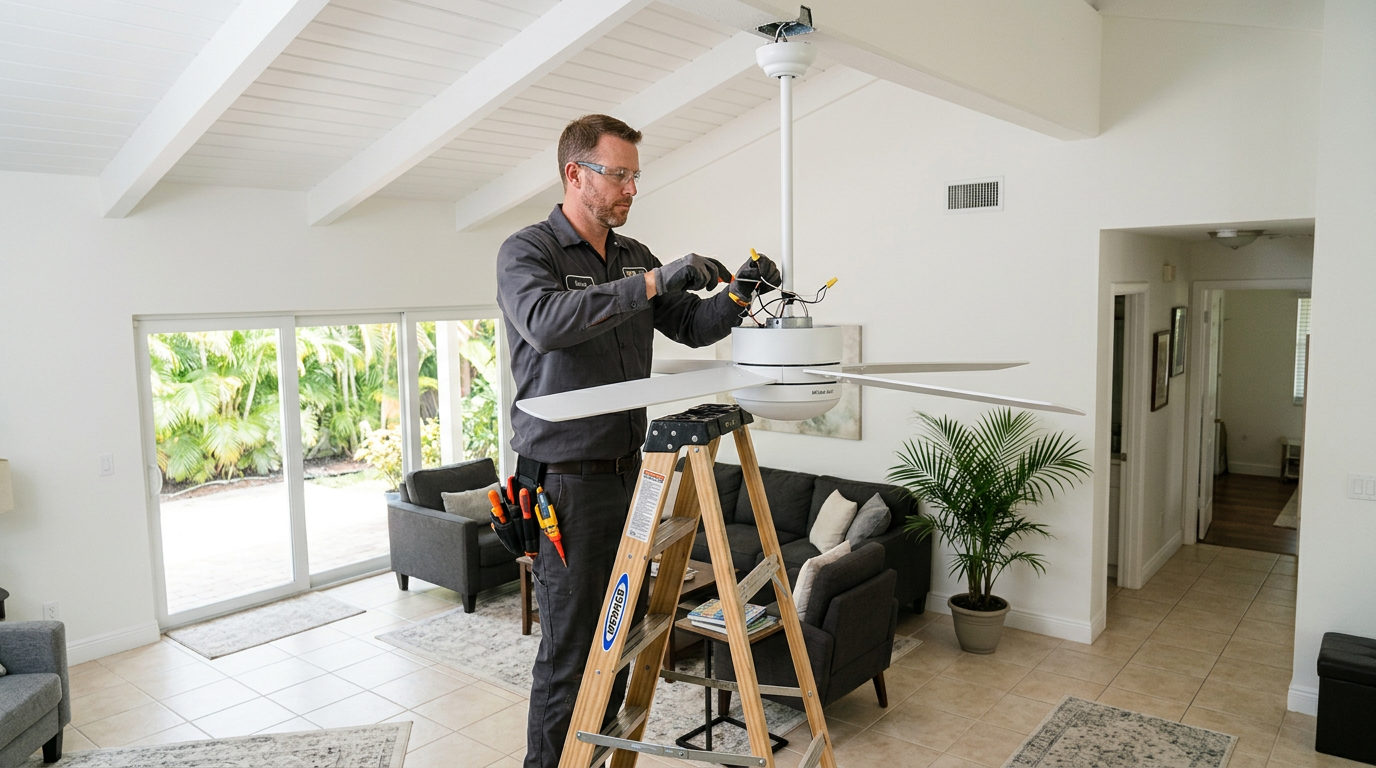
In Boynton Beach, minor electrical updates like swapping an existing light switch or fixture cost between $120 and $280 in labor, while complex projects like subpanel installations, EV charger dedicated circuits, or main service panel upgrades cost between $500 and $2,800+. Under the Florida Building Code (NEC 2020/2023 guidelines) and Palm Beach County enforcement, any work involving new circuit runs, panel alterations, or structural alterations requires official city permitting and licensed trade contractors. Attempting high-voltage DIY electrical work in Boynton Beach concrete block homes risks electrical fires, high shock hazards, voided homeowner's insurance claims, and municipal code violations.
Taking on weekend projects around your property can be rewarding, but when it comes to standard household voltage, Florida home construction creates unique technical challenges. What might look like a simple 10-minute wiring tutorial online quickly turns complicated when dealing with 1970s aluminum wiring in Leisureville, solid concrete block walls in Canyon Isles, or corroded coastal exterior boxes along the Intracoastal. Knowing where the line sits between safe home upkeep and mandatory professional installation keeps your family safe, your HOA happy, and your property value intact.
Florida Home Construction and Electrical Hazards
Residential property in Boynton Beach differs significantly from homes built in Northern or Midwestern states. Understanding local building materials helps explain why DIY electrical work carries elevated risks in South Florida.
Concrete Block Structure (CBS) and Wall Wiring
Most single-family homes in neighborhoods like Aberdeen Golf & Country Club or Hunter's Run feature exterior walls made of solid concrete block coated with exterior stucco. Electrical wiring running along these exterior walls is secured behind 3/4-inch furring strips and shallow drywall.
When standard homeowners attempt to drill into exterior drywall to mount heavy items or relocate electrical boxes, they run a massive risk of nicking live electrical cables hidden inside narrow wall cavities. Accidental contact with a masonry bit can split Romex insulation, causing immediate arcing or silent, smoldering fires behind the wall framing.
High Humidity and Coastal Salt Air Corrosion
Humidity in Palm Beach County remains high year-round. For homes located east of Interstate 95 and near the Intracoastal Waterway, airborne salt accelerates copper oxide build-up on wire connections, breaker tabs, and outdoor outlets.
When a homeowner opens an exterior breaker panel or patio box, oxidized screws and brittle insulation frequently break off during routine handling. What started as a simple outlet adjustment can instantly spark a dead short or destroy an aging circuit breaker.
Key takeaway: Solid concrete block walls and salt-air oxidation make South Florida home wiring far less forgiving than standard wood-frame construction. A simple slip of a drill or twisted copper wire can trigger immediate structural or electrical hazards.
What Electrical Work Can a Homeowner Safely Replace?
Not every electrical job requires calling an electrical contractor. There is a distinct line between basic cosmetic fixture swaps and complex system installations.
Safe DIY / Handyman Level Updates
If the underlying wiring, junction box, and circuit capacity are already in place and fully functional, replacing existing cosmetic fixtures is generally straight forward:
- Replacing Existing Wall Switches & Outlets: Swapping a discolored standard 15-amp outlet for a fresh white switch using existing wiring connections.
- Upgrading Existing Fixtures: Performing a simple light fixture installation where a working ceiling box and wall switch are already wired.
- Replacing Existing Ceiling Fans: Executing a standard ceiling fan installation on an existing fan-rated outlet box.
- Smart Doorbell & Thermostat Swapping: Replacing low-voltage (16V-24V) control devices that do not touch primary 120V household lines.
Pro-Only & Licensed Trade Electrical Work
Under Palm Beach County ordinance and Florida Statutes, the following tasks should never be attempted as a DIY project:
- Main Service Panel Upgrades: Replacing or upgrading 100-amp panels to 200-amp service.
- Adding New Electrical Circuits: Running new 120V or 240V lines from the main service panel through walls or attics.
- Subpanel Installations: Adding garage or detached shed subpanels for heavy equipment or EV chargers.
- Aluminum Wiring Remediation: Working on original 1960s-1970s single-strand aluminum wiring found in older Boynton Beach developments (requires specialized COPALUM or AlumiConn connectors).
- Pool, Spa, and Dock Wiring: High-risk wet location wiring requiring strict ground-fault isolation, bonded bonding grids, and specialized municipal inspections.
4 Dangerous DIY Electrical Mistakes in Boynton Beach
Every year, Boynton Beach home inspectors and repair technicians encounter dangerous non-compliant electrical jobs installed by well-meaning property owners. Here are the four most frequent traps:
1. Overloading Existing Circuits in Gated HOA Communities
In master-planned communities like Renaissance Commons or Mirabella Villas, bedrooms and living areas are often looped together on single 15-amp arc-fault circuits. Homeowners who install high-draw portable air conditioners, space heaters, or home server racks on existing bedroom circuits frequently trip breakers. Tying new outlets directly into existing overloaded circuits creates severe fire risks behind bedroom drywall.
2. Using Non-Weatherproof Boxes in Covered Patios (Lanai)
South Florida outdoor living space is an essential part of daily life. However, installing standard indoor-rated junction boxes, outlets, or ceiling fans on an open patio leads to rapid moisture intrusion. Rain driven by summer tropical storms easily penetrates indoor-rated assemblies, causing ground faults and short circuits.
3. Cutting Structural Furring Strips or Block Ties
When trying to fish wire for wall-mounted televisions or new wall sconces, DIYers often notch out interior wooden furring strips mounted against concrete block. Damaging these strips compromises the anchorage for your drywall, leaving loose wall panels that require extensive drywall repair to correct.
4. Bypassing Ground Fault Circuit Interrupters (GFCI)
Florida building codes strictly require GFCI protection for all outlets located within six feet of water sources—including kitchens, bathrooms, garages, exterior walls, and laundry rooms. Homeowners replacing GFCI outlets with standard duplex receptacles to stop nuisance trips bypass a critical life-safety system designed to prevent electrocution.
Key takeaway: Improper exterior wiring or bypassing GFCI outlets violates the Florida Building Code, creates extreme shock hazards in wet tropical conditions, and frequently leads to denied insurance claims after water or fire damage.
Permits, HOA Regulations, and Insurance Risks
Before picking up a wire stripper or drill in Boynton Beach, every homeowner must understand the regulatory landscape governing home electrical systems.
City of Boynton Beach Building Division Rules
The City of Boynton Beach Building Division enforces the Florida Building Code. By law, any project that adds, alters, or extends electrical wiring requires a building permit pulled by a licensed contractor. If unpermitted electrical work is identified during a home inspection when selling your property, code enforcement can issue fines, force walls to be opened for inspection, and require full tear-out of non-compliant wiring.
HOA Architectural Control Committee (ACC) Approval
Most suburban neighborhoods in Boynton Beach operate under strict HOA covenants. Modifications visible from the exterior—such as high-voltage car chargers installed outside garages, outdoor security lighting, or roof-mounted solar connections—require formal ACC review. Unapproved electrical modifications can lead to daily HOA fines until rectified.
Homeowner's Insurance Voidance
Florida's residential property insurance market is among the most stringent in the nation. Insurance adjusters investigating home fires or major electrical surges actively look for unpermitted electrical installations or improper DIY work. If an unpermitted panel modification or DIY electrical splices caused the damage, insurance carriers have legal grounds to deny structural fire claims entirely.
2026 Boynton Beach Electrical & Handyman Price Guide
Understanding realistic local pricing helps homeowners budget wisely and recognize fair quotes for professional help. Below are average local cost ranges in Boynton Beach for 2026:
| Service Description | Typical Scope / Details | Estimated Cost Range (2026) |
|---|---|---|
| Single Fixture Replacement | Swapping standard indoor hanging light or vanity fixture | $120 – $220 |
| Ceiling Fan Swap (Existing Box) | Removing old fan, assembling & installing new fan (up to 10 ft) | $150 – $280 |
| Standard Outlet / Switch Upgrade | Replacing up to 5 worn devices on functional existing wiring | $140 – $260 |
| GFCI Outlet Installation | Installing code-compliant GFCI protection in kitchen/bath | $125 – $225 |
| Dedicated 240V EV Charger Circuit | Running new dedicated line from panel to garage (Permit Req.) | $650 – $1,600 |
| Electrical Subpanel Installation | Adding 60-100A panel for garage/addition (Permit Req.) | $1,200 – $2,800 |
| Whole-Home Panel Upgrade | Upgrading aging 100A panel to 200A service (Permit Req.) | $2,200 – $4,500+ |
Note: Jobs requiring structural drywall cutting, block drilling, or high ceiling access may require secondary finishing services or specialized access equipment.
When to Call Palm Handyman for Local Home Maintenance
Maintaining a residence in Boynton Beach requires balancing safe self-performance with professional trade expertise. For everyday minor upgrades—such as replacing old decorative fixtures, mounting ceiling fans, updating outlet faceplates, or performing routine property maintenance—hiring an experienced handyman service saves time and avoids safety risks.
If your home needs new breaker boxes, primary service upgrades, or fresh branch circuit wiring through structural block walls, always consult a licensed master electrician who can secure necessary city permits.
For general home updates, fixture assembly, drywall patching, and non-permit cosmetic home care, working with a reliable local team keeps your Boynton Beach property running smoothly year-round.
Get a free estimate
Need help replacing ceiling fans, updating light fixtures, or tackling home maintenance tasks in Boynton Beach? Contact Palm Handyman today for reliable, professional service.
Call our local office directly at (561) 299-0890 or submit your project details online through our convenient online booking page to schedule your free estimate.
Need a handyman in Palm Beach County?
Get a free written estimate in minutes. Same-day appointments available across PBC.
Related services
Frequently asked questions
Most jobs start at $95 for the first hour with transparent flat-rate pricing on common tasks like TV mounting ($129), ceiling fans ($149), and drywall patches ($95). You'll always get a clear quote before any work begins — no hidden fees.
Yes. We reserve same-day and next-day appointments across Boca Raton, Delray Beach, Boynton Beach, West Palm Beach, Palm Beach Gardens, Jupiter, Lake Worth, and Wellington. Call us before noon for same-day availability.
Absolutely. Palm Handyman is fully licensed in Florida and carries $2M general liability plus workers' comp on every technician. We'll send the COI directly to your HOA or property manager on request.
We cover all of Palm Beach County including Boca Raton, Delray Beach, Boynton Beach, West Palm Beach, Palm Beach Gardens, Jupiter, Lake Worth, Wellington, Palm Beach Island, Manalapan, and Highland Beach.