
Delray Beach Pre-Hurricane Home Walkthrough Guide (2026)
A complete 2026 pre-hurricane home walkthrough checklist for Delray Beach homeowners, covering exterior seals, rooflines, doors, and local code prep costs.
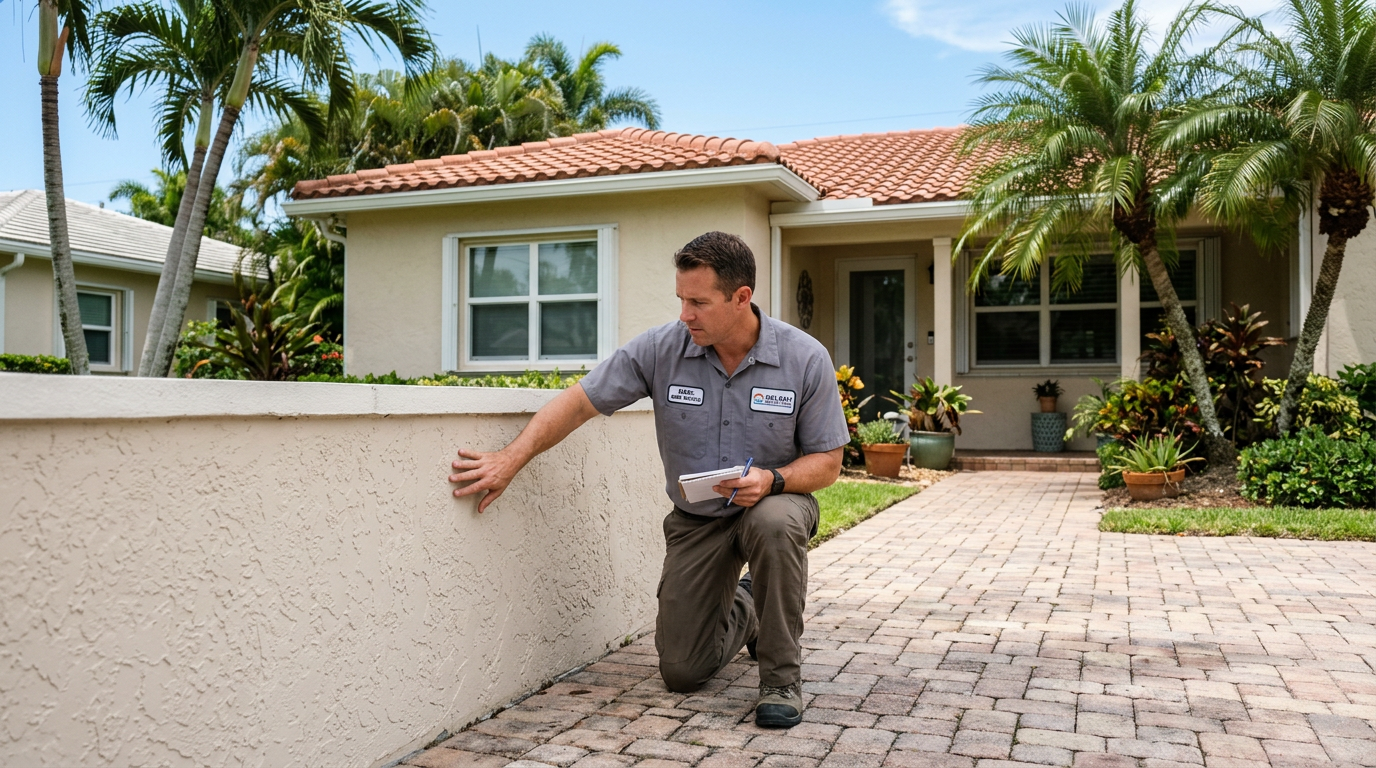
A professional pre-hurricane season home walkthrough in Delray Beach typically costs between $150 and $450, depending on home square footage, roofline accessibility, and whether minor sealant or hardware adjustments are completed during the visit. For a standard 2,000-square-foot single-family home in neighborhoods like Lake Ida, Tropic Isle, or Kings Point, homeowners spend an average of $250 for a full exterior envelope, window seal, door weatherstripping, and soffit audit. Executing this walkthrough between April and May ensures your property complies with Florida Building Code maintenance standards before Atlantic tropical activity picks up in June.
Taking early action is critical in South Florida's coastal climate. Waiting until a named tropical storm enters the Bahamas creates severe contractor backlogs, material shortages, and rushed DIY attempts. A structured spring walkthrough allows you to identify hidden envelope vulnerabilities—such as hairline stucco cracks, degraded window sealant, or loose soffits—well before wind-driven rain can penetrate your home.
2026 Delray Beach Pre-Hurricane Walkthrough & Repair Costs
Below is a pricing breakdown for common pre-hurricane inspection items and preventative maintenance tasks across Delray Beach and neighboring communities like Boca Raton.
| Maintenance & Inspection Service | Scope of Work | Estimated Local Cost (2026) |
|---|---|---|
| Pre-Hurricane Envelope Walkthrough | Complete roofline, soffit, window, door, and perimeter fence audit | $150 – $350 |
| Exterior Stucco & Crack Sealing | Elastomeric caulking of perimeter cracks (up to 50 linear ft) | $175 – $375 |
| Window & Door Weatherstripping Replacement | Replacing worn rubber/vinyl seals on exterior openings | $120 – $280 |
| Soffit & Fascia Securement | Re-securing loose aluminum soffits & minor wood fascia repairs | $200 – $550 |
| Perimeter Fence & Latch Reinforcement | Repairing loose posts, structural brackets, and storm latches | $180 – $420 |
| Attic & Ceiling Moisture Inspection | Checking truss clips, insulation, and interior drywall condition | $125 – $250 |
Why Pre-Hurricane Preparation Starts in April and May
South Florida weather patterns shift dramatically around mid-May. The arrival of the daily rainy season introduces high humidity, frequent afternoon downpours, and intense solar exposure. By the official start of hurricane season on June 1st, Atlantic sea surface temperatures are already rising.
Salt air off the Atlantic coast accelerates the degradation of rubber door sweeps, window caulking, and metal fasteners. Regular annual property maintenance completed in early spring stops salt-air corrosion and heavy rains from compromising your structural envelope. Proactive maintenance is far less expensive than emergency remediation after water forces its way past deteriorated seals during a storm event.
Step 1: Exterior Envelope Audit (Stucco, Roofline, and Soffits)
Most Delray Beach residential architecture—from mid-century single-family homes near Downtown Delray to modern builds in Seagate—relies on concrete block construction (CBS) finished with exterior stucco over wire lath. While CBS walls provide outstanding structural protection against high winds, stucco surfaces expand and contract with summer thermal changes, leading to subtle cracks.
Stucco and Foundation Cracks
Inspect your home's exterior walls under direct daylight. Pay close attention to corners around window frames, sliding glass door headers, and where the stucco meets the concrete foundation slab. Hairline cracks smaller than 1/16th of an inch can accept high volumes of water when subjected to 60+ mph wind-driven rain. All cracks should be cleaned, prepped, and sealed using dynamic elastomeric masonry sealant.
Roofline, Fascia, and Soffit Panels
Look up at your roofline. Delray Beach homes frequently feature barrel tile, flat concrete tile, or architectural asphalt shingles. Ensure fascia boards behind gutters are solid and free of rot. Loose aluminum or vinyl soffit panels are a major vulnerability: under sudden pressure changes, unanchored soffits can blow out, allowing rain to pour directly into your attic space.
Key takeaway: Hairline stucco cracks as small as 1/16th of an inch can admit gallons of water under tropical-storm wind pressure. Sealing stucco openings with high-grade elastomeric sealant before June prevents interior framing and insulation damage.
Step 2: Doors, Windows, and Opening Protection
During a hurricane or severe tropical storm, your windows and exterior doors bear the brunt of atmospheric pressure changes. If wind or water penetrates an opening, interior pressure increases dramatically, creating uplift forces on the roof structure.
Perimeter Window Seals and Weep Holes
Check the exterior silicone bead surrounding each window frame. Constant exposure to coastal ultraviolet rays and salt mist causes caulking to shrink, harden, and split away from the building envelope. If window frames show gaps or deteriorated sealant, scheduling a professional window repair protects your drywall jambs and sills.
Additionally, inspect the weep holes along the bottom track of vinyl and aluminum windows. Clear away accumulated dirt, salt buildup, and spider webs. If weep holes are blocked, rainwater cannot drain outward and will overflow onto interior floors.
Exterior Doors and Sliding Glass Assemblies
Test every exterior door latch and deadbolt. Exterior doors should pull tightly against the weatherstripping without excessive play. Worn bottom sweeps and degraded frame perimeter seals allow driving rain to seep beneath doors into living areas. Completing targeted door repair to realign misaligned strike plates and install commercial-grade weather seals keeps your entryway secure.
For sliding glass patio doors, clean the lower track thoroughly. Remove sand and corrosion so door panels lock firmly into the frame receivers during tropical weather warnings.
Step 3: Fences, Outdoor Structures, and Drainage Pathways
Exterior structures around your yard can quickly turn into debris hazards or suffer major structural failure during high-wind events if they are not audited beforehand.
Fencing and Gate Mechanisms
Whether your property features pressure-treated pine, vinyl, or aluminum fencing in communities like Rainberry Park or Delray Isles, inspect every post connection. Rotted wood footers or rusted metal mounting brackets cause fence sections to collapse under sustained winds. Getting timely fence repair to reinforce loose posts, re-anchor footers, and replace failing gate latches protects both your property boundaries and neighboring homes in communities with active Homeowners Associations (HOAs).
Gutters and Ground Drainage
Delray Beach HOAs often require clear drainage corridors around residential lots. Ensure roof gutters are completely free of leaves, seed pods, and roof shingle granules. Downspouts must extend at least three to five feet away from your foundation to prevent soil erosion and water pooling against slab walls during multi-day rain storms.
Key takeaway: Fences and detached yard structures are often subject to separate, higher deductibles under Florida home insurance policies. Securing posts, brackets, and latches during your spring walkthrough prevents costly out-of-pocket storm repairs.
Step 4: Interior Attic and Ceiling Moisture Inspection
A comprehensive pre-hurricane walkthrough requires examining the interior side of your home envelope. Catching hidden moisture issues before summer storms strike saves thousands in emergency remediation.
Checking Attic Vents and Truss Clips
Access your attic space safely during cooler morning hours. Check around gable vents, ridge vents, and roof penetrations (such as plumbing stacks and vent flues) for signs of water staining or daylight gaps. Inspect metal hurricane truss clips for signs of rust or condensation accumulation.
Inspecting Interior Drywall and Ceilings
Check interior ceilings and perimeter walls, particularly around window headers, sliding door openings, and room corners. Spotting water rings, paint bubbling, or tape peeling early allows you to address the root exterior leak and complete clean drywall repair before seasonal torrential rains worsen the damage. Homeowners in nearby coastal areas like Boynton Beach face identical humidity and storm exposure challenges.
Pre-Hurricane Maintenance Action Timeline
Follow this month-by-month spring timeline to keep your Delray Beach home fully prepared:
- April (Walkthrough & Audit): Perform a complete visual walkthrough of stucco, soffits, windows, doors, and fencing. Make a master list of worn seals and hardware.
- May (Repairs & Maintenance): Replace deteriorated weatherstripping, clear window weep holes, seal stucco cracks, repair fence posts, and clear all gutters.
- June (Final Checks): Test storm shutter hardware or impact window locks, trim overhanging tree branches away from rooflines, and inventory emergency backup supplies.
Get a free estimate
Ensure your home is fully protected before tropical weather arrives. Call Palm Handyman today at (561) 299-0890 or request your free estimate online at /book to schedule your 2026 pre-hurricane home walkthrough in Delray Beach.
Need a handyman in Palm Beach County?
Get a free written estimate in minutes. Same-day appointments available across PBC.
Related services
Frequently asked questions
Most jobs start at $95 for the first hour with transparent flat-rate pricing on common tasks like TV mounting ($129), ceiling fans ($149), and drywall patches ($95). You'll always get a clear quote before any work begins — no hidden fees.
Yes. We reserve same-day and next-day appointments across Boca Raton, Delray Beach, Boynton Beach, West Palm Beach, Palm Beach Gardens, Jupiter, Lake Worth, and Wellington. Call us before noon for same-day availability.
Absolutely. Palm Handyman is fully licensed in Florida and carries $2M general liability plus workers' comp on every technician. We'll send the COI directly to your HOA or property manager on request.
We cover all of Palm Beach County including Boca Raton, Delray Beach, Boynton Beach, West Palm Beach, Palm Beach Gardens, Jupiter, Lake Worth, Wellington, Palm Beach Island, Manalapan, and Highland Beach.