DIY vs. Pro Drywall Repair in Boca Raton: Is It Worth It?
Thinking about patching your Boca Raton drywall yourself? Compare DIY material costs, labor time, orange peel/knockdown texture challenges, and pro handyman rates.
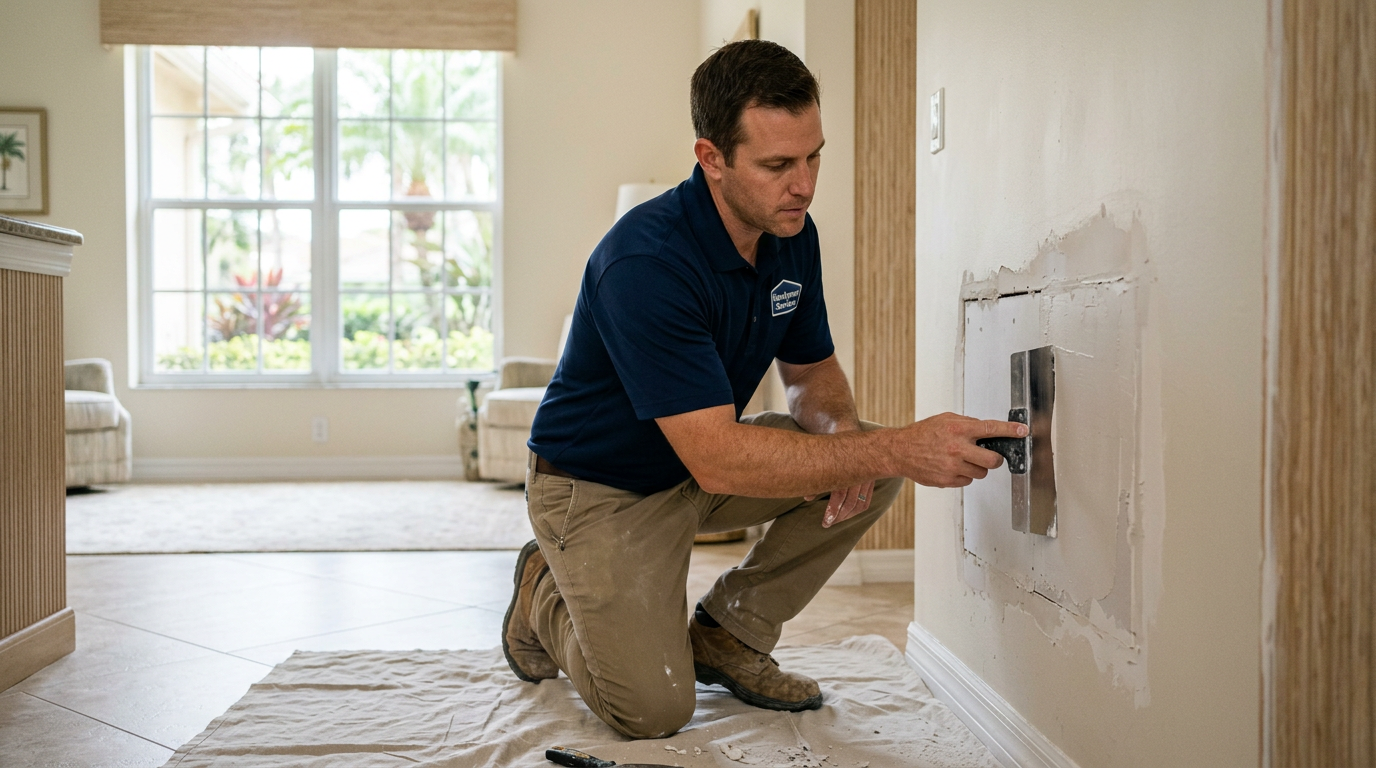
In Boca Raton, professional drywall repair costs between $200 for minor doorknob patches to $850 or more for major water-damaged ceiling sections, whereas a complete DIY repair kit runs between $45 and $90 in raw materials. However, DIYers routinely invest 6 to 12 hours of labor across multiple drying cycles, only to end up with visible patches, mismatched spray textures, or recurring mud cracks caused by high coastal humidity. For small nail holes, a self-repair is fast and sensible, but for wall cutouts, ceiling sags, or texture matching in custom homes, hiring a licensed technician saves time, protects resale value, and ensures compliance with South Florida structural standards.
Understanding Boca Raton Wall Construction and Textures
Drywall repair in Palm Beach County is significantly different from fixing a wall in other parts of the country. Many homes in neighborhoods like Boca Falls, Woodfield Country Club, and Royal Palm Yacht & Country Club feature exterior walls constructed from Concrete Masonry Units (CMU) lined with thin wooden furring strips. Interior partitions are typically framed with light-gauge steel studs or traditional lumber.
When a wall sustained impact damage—whether from moving furniture or anchor pull-outs—the underlying structure dictates how you patch it. Drywall installed over concrete block offers minimal rear clearance (often just 3/4 of an inch). Standard deep-wall toggle bolts or thick backing boards will hit solid concrete before sitting flush. If you try to drive standard drywall screws directly through a patch without accounting for the underlying masonry, you risk splitting the furring strips or snapping the fasteners.
Additionally, smooth drywall is rare across East and West Boca homes. The overwhelming majority of residential properties feature specialized wall surfaces:
- Knockdown Texture: Formed by spraying joint compound droplets onto the drywall sheet and dragging a rubber squeegee or trowel across the high points once partially set.
- Orange Peel Texture: A continuous, fine aerosol spatter resembling citrus skin, requiring precise compressed air control to match standard thickness.
- Smooth/Level 5 Finish: Found primarily in modern luxury builds around Downtown Boca and Mizner Park, requiring flawless skim-coating with no surface imperfections.
Key takeaway: Matching knockdown or orange peel textures on South Florida drywall requires precise compounding ratios and pressure settings. A poorly blended patch stands out under ambient lighting even after applying high-quality paint.
The Real Cost Breakdown: DIY vs. Professional Handyman
Before taking on a weekend drywall project, it helps to examine the financial reality. While buying a tub of lightweight spackle and a plastic putty knife seems economical at first glance, properly completing a drywall patch demands far more specialized gear.
To perform a seamless drywall repair that lasts, a homeowner must purchase drywall panels, joint tape (mesh or paper), setting-type joint compound (hot mud), multi-grit sandpaper, a mud pan, 4-inch and 10-inch taping knives, primer, paint, and texture aerosols or a hopper gun setup. Below is a realistic 2026 cost comparison for repairs in the Boca Raton area.
| Repair Type | Average DIY Material Cost | DIY Time Invested | Average Pro Handyman Cost | Key Risks & Considerations |
|---|---|---|---|---|
| Doorknob / Small Hole (2"–4") | $30 – $50 | 2 – 4 hours | $150 – $250 | Mismatched paint sheen, flashing patch lines |
| Medium Cutout (12" x 12") | $60 – $110 | 5 – 8 hours | $250 – $450 | Uneven joint compound, flashing seams, texture lines |
| Large Patch / Plumbing Cutout | $90 – $160 | 8 – 14 hours | $400 – $750 | Structural sagging, moisture trap behind wall, severe texture misalignments |
| Ceiling Drywall Patch | $100 – $180 | 10 – 16 hours | $500 – $900+ | Overhead sanding dust hazards, gravity sagging, compound cracking |
| Water Damage Section Repair | $120 – $220 | 12 – 18 hours | $550 – $1,100 | Unaddressed mold, structural decay, failing to fix underlying source |
| Skim Coating Full Room (Level 5) | $150 – $300 | 20 – 35 hours | $1,200 – $2,800 | Extreme labor, uneven lighting shadows, massive dust contamination |
When calculating DIY expenses, remember that unused compound tubs dry out quickly in South Florida garages. If you must buy a dedicated utility knife, hand sanders, drop cloths, tape, and dynamic texture spray cans, your upfront material spend quickly approaches the cost of an efficient professional service.
The Technical Challenges of DIY Drywall Repairs
1. High-Humidity Drying Cycles
South Florida’s indoor ambient air frequently carries elevated humidity levels, particularly during summer months or when air conditioning systems cycle off. Standard premixed joint compound relies on evaporation to harden. In high humidity, a thick coat of premixed bucket mud can take 24 to 36 hours to dry per layer.
Applying a secondary layer or texture over damp compound locks moisture inside the wall. Over time, this trapped moisture causes joint tape to bubble, compound to shrink and crack, or micro-mold to bloom behind fresh paint. Licensed technicians use chemical-setting joint compounds (often referred to as "hot mud" or Easy Sand 20/45). Hot mud hardens via a chemical reaction rather than evaporation, drying rapidly regardless of atmospheric moisture.
2. Texture Matching Frustrations
Hardware store cans of aerosol wall texture promise an instant match, but achieving identical splatter density is notoriously difficult. Temperature, distance from the wall, and hand velocity change how aerosol droplets land. If the spatter is too heavy, the patch projects outward from the wall like a blister. If it is too light, the repair stays visibly smooth under light reflection.
Professionals dial in the viscosity of the compound using specialized hoppers or hand-stipple techniques, testing patterns on scrap board before applying a single drop to your living room wall.
3. Dust Containment and Indoor Air Quality
Sanding dry joint compound produces fine silica and calcium carbonate particles that float through interior air currents. Without isolation barriers, sanding dust settles into your sofa cushions, carpets, and ductwork. In Boca Raton homes equipped with central HVAC systems, airborne drywall dust gets pulled directly into return vents, clogging filters and coating cooling coils.
Key takeaway: Sanding drywall without negative-pressure air scrubbers or HEPA vacuums risks pulling fine silica dust throughout your home's central HVAC system, requiring professional duct cleaning afterward.
Florida Codes, HOA Rules, and Safety Lines
Drywall acts as more than a cosmetic divider; it is an integral part of your home’s draft-stopping, sound containment, and fire-resistance systems. Under the Florida Building Code, specific wall assemblies require fire-rated Type X drywall (typically 5/8-inch thick).
- Garage-to-Living-Space Walls: Florida code mandates a continuous 1/2-inch or 5/8-inch fire barrier between an attached garage and internal living spaces. Cutting into garage drywall to run wires or fix damage without restoring fire-rated tape and mud violates code.
- HOA Waste & Noise Restrictions: Gated communities across West Boca maintain strict rules regarding construction noise, dumpster placements, and contractor hours. Dropping demolition materials into community trash compactors often results in HOA fines. Working with a registered handyman ensures compliance with local waste disposal standards.
- Plumbing & Electrical Proximity: Patching holes behind sinks or around switches frequently brings DIYers close to live wiring or copper lines. Drilling blindly into furring strips can puncture a water supply line, converting a quick fix into a major flood. For complex repairs involving electrical boxes, pairing your project with professional light fixture installation or bathroom repairs ensures all underlying lines remain intact and safe.
The Honest Threshold: When to DIY vs. When to Call a Pro
Not every wall hole requires professional intervention. Drawing a clear line between weekend projects and professional jobs prevents wasted time and money.
Safe for DIY:
- Tiny Anchor and Nail Holes: Holes smaller than 1/2 inch caused by hanging art or small mirrors. A dab of lightweight spackle, a light sanding, and a quick touch-up with leftover wall paint is straightforward.
- Minor Scrapes: Superficial gouges that do not penetrate through the paper face into the gypsum core.
Best Left to Professionals:
- Door Knob Impacts: Holes ranging from 2 to 6 inches require structural backing (wooden cleats or California patches) to support future door swings without cracking again. Consider pairing this fix with door repair to install proper door stops.
- Ceiling Repairs: Gravity works against overhead drywall patches. Ceiling mudding requires perfect feathering and overhead compound application to avoid dangerous falls or sagging panels.
- Water Damage Cutouts: If a roof leak or pipe failure soaked your drywall, the affected area must be cut back to clean studs. The surrounding area must be thoroughly dried, treated for mold spores, and re-anchored.
- Large Cracks from Settlement: Linear cracks radiating from door corners or ceiling joints often signal structural shift. A professional installs fiber tape, evaluates joint stress, and uses setting compounds designed to flex slightly without re-cracking.
- Post-Installation Patching: Removing old wall fixtures, mounting brackets, or heavy hardware leaves wide wall voids. If you are having new television setups installed, combining expert wall repairs with TV mounting delivers a clean, seamless finish without exposed patch lines.
Once the drywall patching, taping, floating, and texturing are complete, top-tier results rely on professional painting services to prime the porous compound and blend the paint sheen perfectly across the wall surface.
Comprehensive Property Maintenance Solutions
Taking care of drywall issues is often part of a larger home maintenance routine. Homeowners looking to protect their property value frequently bundle cosmetic repairs with broader structural upkeep, such as property maintenance, ensuring that every corner of their home remains solid, clean, and visually striking.
Get a Free Estimate
Avoid spending your weekend covered in sanding dust and battling spray texture cans. Call Palm Handyman at (561) 299-0890 or book your appointment online at /book for prompt, seamless drywall repairs across Boca Raton and Palm Beach County.
Need a handyman in Palm Beach County?
Get a free written estimate in minutes. Same-day appointments available across PBC.
Related services
Frequently asked questions
Most jobs start at $95 for the first hour with transparent flat-rate pricing on common tasks like TV mounting ($129), ceiling fans ($149), and drywall patches ($95). You'll always get a clear quote before any work begins — no hidden fees.
Yes. We reserve same-day and next-day appointments across Boca Raton, Delray Beach, Boynton Beach, West Palm Beach, Palm Beach Gardens, Jupiter, Lake Worth, and Wellington. Call us before noon for same-day availability.
Absolutely. Palm Handyman is fully licensed in Florida and carries $2M general liability plus workers' comp on every technician. We'll send the COI directly to your HOA or property manager on request.
We cover all of Palm Beach County including Boca Raton, Delray Beach, Boynton Beach, West Palm Beach, Palm Beach Gardens, Jupiter, Lake Worth, Wellington, Palm Beach Island, Manalapan, and Highland Beach.