DIY vs. Pro Drywall Repair in Palm Beach Gardens Guide
Compare DIY costs against professional drywall repair in Palm Beach Gardens. Learn about texture matching, HOA rules, and Florida building code limits.
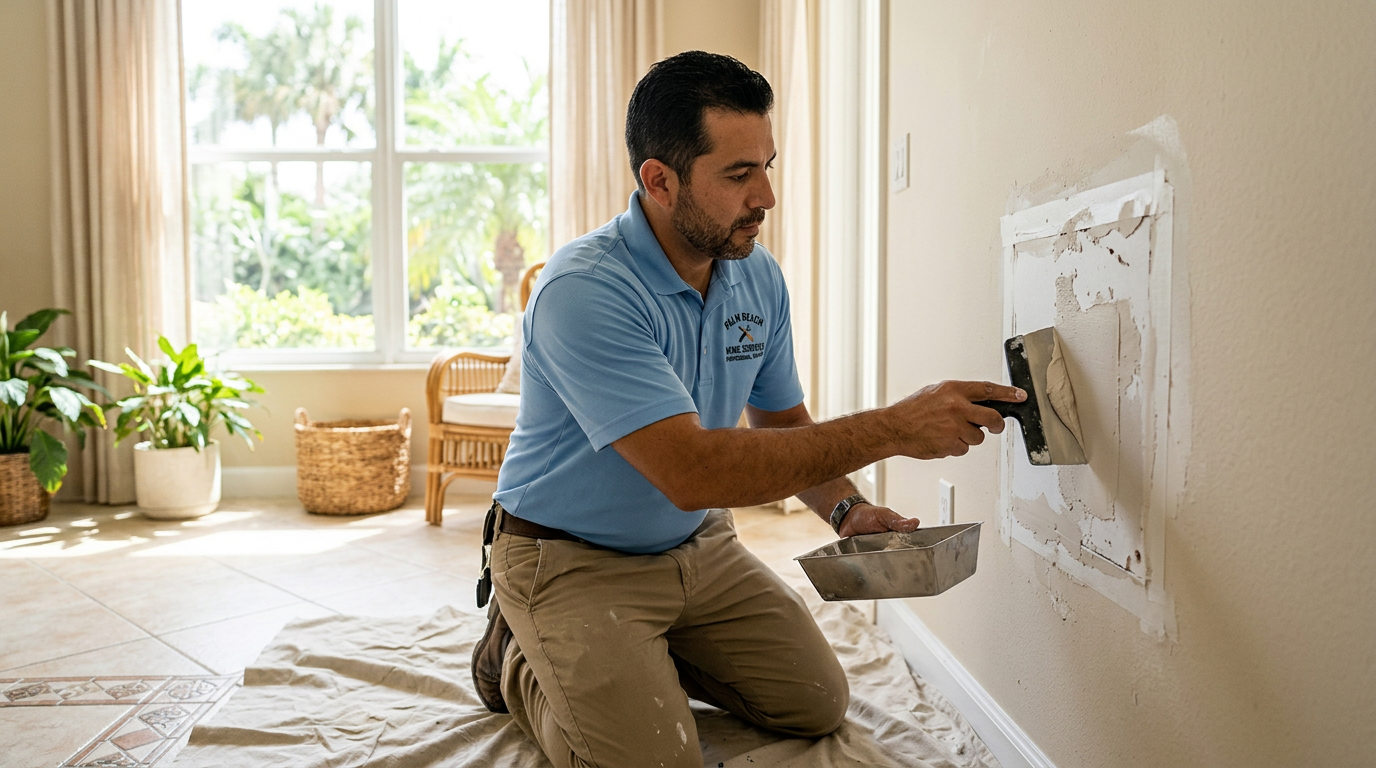
In Palm Beach Gardens, minor DIY drywall repairs like patching nail holes or small doorknob dings cost between $20 and $50 in materials, while professional drywall repairs typically cost between $200 and $750 for standard wall patches and $800 to $1,400+ for large ceiling damage requiring custom texture matching. While fixing a minor surface ding on an interior partition wall is a straightforward weekend task, any repair involving electrical lines, AC condensate pipe leaks, or load-bearing concrete block furring strips must adhere to the Florida Building Code and local HOA regulations. Knowing where to draw the line between a quick spackle job and hiring a licensed specialist protects your home's structural integrity, aesthetic value, and insurance coverage.
The Real DIY Line: When to Patch Yourself vs. Calling a Pro
Drywall repair seems simple on home improvement television shows: apply compound, sand, and paint. However, homes in Palm Beach Gardens feature unique architectural elements and coastal environmental factors that complicate basic wall restoration.
Deciding whether to tackle a hole yourself or hire a professional comes down to hole size, wall composition, location, and matching existing textures.
The DIY Sweet Spot
You can comfortably tackle drywall repair as a weekend DIY project if:
- The damage is small: Stress cracks around door frames, nail pops, or small punctures under 3 inches in diameter (such as doorknob hits).
- The location is out of direct focal lines: Hallway nooks, inside closets, or behind furniture where minor texture imperfections will not draw immediate attention.
- No mechanicals are behind the board: The wall section contains no electrical conduit, water supply lines, or HVAC ducting.
When to Call a Professional
You should hire a skilled professional for drywall repair services if:
- The cutout is larger than 6x6 inches: Larger holes require custom wood backing, precise drywall scoring, tape embedding, and multiple feathered compound coats.
- Ceilings are involved: Overhead repairs require structural support, heavy ceiling compound application, and overhead spray-texture techniques that are physically demanding and hazardous without proper equipment.
- Water damage caused the issue: Water-stained or sagging sheetrock indicates active or past leaks from roof lines or air conditioning handler drain lines. The source must be addressed, and structural moisture levels verified before installation.
- Texture matching is required: Most Palm Beach Gardens residences feature knockdown or custom orange-peel finishes that are notoriously difficult to match with off-the-shelf aerosol cans.
Florida Building Code, Electrical Safety, & HOA Realities
Homeowners often overlook regulatory and structural rules when cutting into walls. In Palm Beach Gardens, local codes and community association covenants govern residential modifications.
CBS Walls vs. Interior Wood Framing
Many single-family homes in neighborhoods like PGA National, Mirasol, Frenchman's Reserve, and Evergrene feature Concrete Block Structure (CBS) construction on exterior perimeter walls. Unlike traditional 2x4 interior partition walls, CBS walls utilize thin 1x2 or 2x2 vertical wood furring strips attached directly to the concrete block.
When repairing drywall over a CBS wall, there is rarely more than 3/4 inch to 1.5 inches of clearance behind the sheetrock. Driving standard 2-inch drywall screws into these areas will hit solid concrete, stripping the screw or cracking the block. Professional handymen use masonry-rated anchors, shortened drywall fasteners, or construction adhesive engineered for concrete applications.
Fire-Rated Assemblies (Garage Firewalls)
Under the Florida Building Code (FBC), the wall separating your living space from an attached garage must maintain a strict fire-resistant barrier. FBC requires 5/8-inch Type X fire-rated drywall on garage-side walls and ceilings.
If you accidentally puncture or cut through garage drywall to run cables or perform repairs, patching it with standard 1/2-inch interior drywall violates building code. A failed fire-barrier patch can create compliance issues during home inspections and pose serious safety hazards.
Electrical Wiring Hazards
Before cutting into drywall to patch a hole or create a clean edge, you must know what lies directly behind the wall. Modern homes often have high-voltage lines, alarm system wires, or low-voltage cables running through stud bays.
For example, when homeowners cut into drywall near entertainment centers or wall-mounted displays without using shallow cut depth controls, they risk severing concealed wires. If your repair coincides with hanging electronics, hiring professionals experienced in both wall restoration and tv mounting ensures hidden wiring remains uncompromised.
Gated Community HOA Rules
Living in master-planned communities across Palm Beach Gardens means following strict Homeowners Association guidelines:
- Approved Work Hours: Most HOAs in developments like Alton or BallenIsles restrict loud contractor or power tool work to weekdays between 8:00 AM and 5:00 PM, with limited or no weekend work permitted.
- Trash Disposal: Dumping drywall scraps, Joint compound buckets, or construction materials into residential curbside bins or community dumpsters violates HOA rules and can result in fines.
- Contractor Registration: If you hire out the work, your HOA may require the company to present active general liability and worker's compensation insurance at the security gate prior to entry.
Key takeaway: Always check your garage firewall specifications and HOA contractor rules before starting drywall work. Using improper drywall thickness in garage firewalls violates the Florida Building Code, while improper disposal of materials can trigger HOA fines.
The Texture Matching Nightmare: Knockdown vs. Orange Peel
Achieving a structurally flat repair is only half the battle. In South Florida, flat smooth-finish drywall is rare; nearly all homes feature decorative textures spray-applied during original construction.
+-------------------------------------------------------------------------+
|                         SOUTH FLORIDA TEXTURE TYPES                     |
+------------------------------------+------------------------------------
| KNOCKDOWN TEXTURE                  | ORANGE PEEL TEXTURE                |
| - Splatter mud dabbed flat with trowel| - Fine, uniform pebbled finish   |
| - Common in main living spaces      | - Common in bathrooms & closets    |
| - Requires hopper gun + PSI control| - Demands precise atomization      |
+------------------------------------+------------------------------------+
Why DIY Aerosol Texture Cans Usually Fail
Retail stores sell aerosol texture cans promising easy repair matching. However, these spray cans present significant challenges:
- Inconsistent Pressure: Propellant pressure drops as the can cools, changing the droplet size midway through application.
- Fixed Viscosity: Aerosol cans use pre-mixed liquid formulas that rarely match the thicker, compound-heavy textures found in Florida homes.
- Noticeable Halo Effect: Spraying an aerosol texture leaves an obvious raised ring around the repair area, making the patch stand out under sunlight.
Professional wall mechanics mix joint compound to custom consistencies, using pneumatic hopper guns with adjustable air nozzles and air pressure settings. They apply the mud splatter, allow it to set for exact timing based on ambient indoor humidity, and execute a flat knife pull to replicate the existing knockdown pattern. Once dried, proper application of primer and custom-blended painting services makes the patch invisible.
Key takeaway: Aerosol spray texture cans rarely match real professional knockdown wall textures. Achieving a seamless blend requires adjusting compound consistency, nozzle orifice size, and air compressor PSI to replicate original wall patterns.
2026 Cost Breakdown: DIY vs. Pro Drywall Repair in Palm Beach Gardens
Evaluating cost involves factoring in the price of tools, specialized joint compounds, texturing equipment, primers, and the value of your personal time. Below is an honest cost comparison for standard drywall repairs in Palm Beach Gardens.
| Damage Type & Scope | DIY Cost Range (Tools & Materials) | Professional Cost Range (2026 Local Rates) | Estimated Time Required | Risk & Complexity Level |
|---|---|---|---|---|
| Small Nail Holes & Small Dings (Under 2 in.) | $20 – $40 | $150 – $250 | DIY: 1–2 Hours Pro: 1 Hour |
Low — Simple DIY spackle project |
| Doorknob Puncture (3 to 5 in. hole) | $45 – $85 | $225 – $375 | DIY: 3–5 Hours Pro: 1.5–2.5 Hours |
Moderate — Requires mesh/wood backing |
| Large Wall Cutout (12x12 in. up to 2x2 ft.) | $80 – $160 | $350 – $650 | DIY: 6–10 Hours Pro: 2–4 Hours |
Moderate to High — Stud backing & texture blending |
| Ceiling Cutout / Water Damage Patch | $120 – $220 | $600 – $1,200+ | DIY: 8–14 Hours Pro: 4–8 Hours |
High — Overhead work, structural framing, matching |
| Garage Firewall 5/8" Type X Patch | $60 – $110 | $300 – $550 | DIY: 3–6 Hours Pro: 2–3 Hours |
High — Must comply with Florida Building Code |
Note: DIY estimates include basic purchases like drywall sheets, joint compound, mesh tape, backing wood, drywall knives, sanding blocks, texture cans, primer, and basic safety gear. They do not account for purchasing power air compressors or specialized hopper guns.
Hidden Hazards: Water Leak Discovery & Mold Concerns
In South Florida's humid environment, drywall damage is frequently caused by plumbing or air conditioning issues.
High-humidity levels in Palm Beach Gardens mean that condensate drain lines on attic-mounted AC handlers can clog. When drain pans overflow, water pools on top of ceiling drywall. If you notice sagging sheetrock or yellowish water rings near air vents or beneath upper-story baths, fixing the drywall is only the final step.
The Water Damage Sequence
- Stop the Leak: Never patch drywall while water is actively infiltrating the area. Complete any plumbing adjustments or bathroom repairs first.
- Check for Mold: Mold spores thrive on damp paper backing in dark wall cavities within 24 to 48 hours in warm Florida temperatures. If you discover dark mold colonies inside the wall, standard patching compound is insufficient; damaged sections must be safely removed and remediation steps completed.
- Verify Structural Moisture Content: Before attaching new drywall sheets, framing lumber and concrete block furring strips must register below 15% moisture content on a digital moisture meter.
Attempting a quick DIY spackle over water-damaged drywall traps moisture inside the wall cavity, leading to recurring paint bubbling, structural deterioration, and unhealthy indoor air quality.
Step-by-Step DIY Assessment Checklist
Before heading to the local hardware store, ask yourself these five questions to determine if your repair is truly a DIY project:
- Are electrical conduits, plumbing pipes, or AC lines located directly behind the cut area?
- If Yes: Call a professional to avoid costly wire cuts or pipe punctures.
- Is the drywall damage located on a ceiling or high wall section requiring scaffolding or ladder work?
- If Yes: Pro handling is recommended to prevent injury and avoid uneven overhead sanding.
- Is the repair on a wall shared with an attached garage?
- If Yes: Ensure you buy 5/8-inch Type X fire-rated drywall to maintain code compliance.
- Does the wall feature a pronounced knockdown or heavy trowel finish?
- If Yes: Replicating this texture without commercial hopper equipment is difficult and often results in visible patches.
- Do you have the necessary time to apply 2-3 thin coats of compound with 12-24 hour drying intervals?
- If No: Rushing joint compound application leads to shrinking, cracking, and premature repair failure.
Taking time to maintain wall integrity is a fundamental part of comprehensive home upkeep. Combining wall repairs with routine home maintenance keeps your property safe, visually appealing, and code-compliant. Homeowners who prefer comprehensive care often group drywall touch-ups into broader property maintenance plans.
Get a Free Estimate
Skip the mess, hassle, and tedious sanding of DIY drywall repair. Palm Handyman delivers seamless wall repairs, perfect texture matching, and fully licensed craftsmanship tailored to Palm Beach Gardens homes.
Call (561) 299-0890 today or schedule your repair online at /book for a quick, transparent, and accurate project estimate.
Need a handyman in Palm Beach County?
Get a free written estimate in minutes. Same-day appointments available across PBC.
Related services
Frequently asked questions
Most jobs start at $95 for the first hour with transparent flat-rate pricing on common tasks like TV mounting ($129), ceiling fans ($149), and drywall patches ($95). You'll always get a clear quote before any work begins — no hidden fees.
Yes. We reserve same-day and next-day appointments across Boca Raton, Delray Beach, Boynton Beach, West Palm Beach, Palm Beach Gardens, Jupiter, Lake Worth, and Wellington. Call us before noon for same-day availability.
Absolutely. Palm Handyman is fully licensed in Florida and carries $2M general liability plus workers' comp on every technician. We'll send the COI directly to your HOA or property manager on request.
We cover all of Palm Beach County including Boca Raton, Delray Beach, Boynton Beach, West Palm Beach, Palm Beach Gardens, Jupiter, Lake Worth, Wellington, Palm Beach Island, Manalapan, and Highland Beach.