
DIY vs Pro Electrical in Palm Beach Gardens: Safety & Code
Learn what electrical work you can safely DIY in Palm Beach Gardens and when Florida building codes, permits, and safety risks require a licensed handyman or electrician.
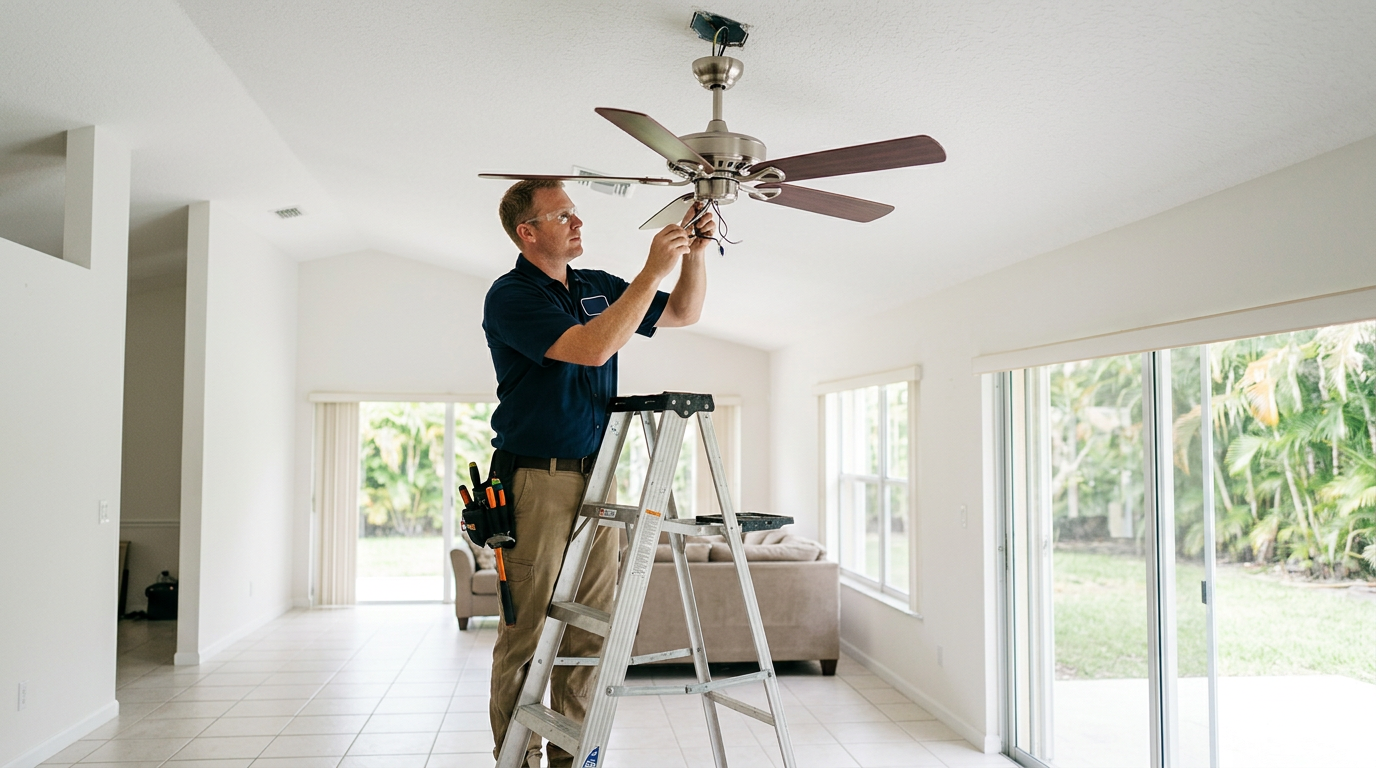
In Palm Beach Gardens, Florida, professional electrical fixture replacements and minor wiring jobs typically cost between $150 and $450, while adding new circuits, dedicated lines, or subpanels ranges from $600 to $2,800. Simple cosmetic updates like changing switch faceplates or plugging in low-voltage landscape transformers are manageable weekend tasks for handy homeowners, but the Florida Building Code (NEC Section 210.8) strictly regulates any work involving circuit modifications, wet-rated outdoor wiring, or breaker box tie-ins. Hiring a qualified handyman or licensed trade specialist ensures your home meets local City of Palm Beach Gardens permitting guidelines and HOA Architectural Review Board (ARB) standards while protecting your home from fire hazards.
The Hidden Electrical Challenges of Palm Beach Gardens Homes
Residential construction in Palm Beach Gardens presents unique electrical challenges that set it apart from northern or western housing markets. Most single-family homes in communities like PGA National, Mirasol, BallenIsles, Evergrene, and Alton rely heavily on Concrete Block Structure (CBS) exterior wall construction. Wiring within CBS walls runs inside embedded electrical conduit or narrow channel voids created by metal furring strips behind drywall.
Attempting to pull new wire, shift junction boxes, or install deep outlet boxes on an exterior wall without specialized tools often damages the surrounding drywall or fractures the conduit line. Furthermore, the coastal subtropical climate in eastern Palm Beach Gardens brings elevated humidity, airborne salt particles, and frequent lightning surges during summer storm seasons. Moisture accelerates copper wire oxidation, corrodes connections inside outdoor outlets, and weakens aging wire nuts.
Florida's strict building regulations incorporate the National Electrical Code (NEC) alongside specific regional amendments designed to resist hurricane-force moisture intrusion and severe atmospheric dampness. Understanding these construction realities helps homeowners evaluate whether a weekend DIY project is safe or potentially disastrous.
The DIY Line: What You Can Fix vs. What You Should Never Touch
Home improvement stores fill their shelves with DIY electrical tools, testing meters, and instructional guides that make rewiring look effortless. However, working with 120-volt or 240-volt residential current carries severe risks of electrocution, arcing, and electrical fires if improper gauge wiring or insecure wire connections are used.
Safe DIY Electrical Tasks
- Replacing Cosmetic Cover Plates: Changing outdated plastic switch or outlet faceplates with updated screwless covers.
- Swapping Standard Lightbulbs: Upgrading incandescent bulbs to energy-efficient LEDs or smart bulbs.
- Low-Voltage Plug-In Systems: Installing 12-volt LED accent strips or plug-in landscape transformers that insert directly into an existing Ground Fault Circuit Interrupter (GFCI) outdoor receptacle.
Projects That Require Professional Expertise
1. Ceiling Fan Upgrades and Structural Mounting
Replacing an existing flush-mount light with a heavy tropical ceiling fan is one of the most common home upgrades in South Florida. However, ceiling fans generate continuous rotational dynamic weight. Standard ceiling junction boxes designed for light fixtures are held in place by basic drywall clips or thin metal brackets that cannot handle dynamic fan loads.
Installing a fan on an improper box will cause the unit to wobble, crack the surrounding drywall ceiling, and eventually rip free from the ceiling joists. A professional handyman verifies box load ratings, installs telescoping fan braces anchored to structural trusses, and completes the precise wiring required for multi-speed wall switches. When updating your ceiling cooling, booking a professional ceiling fan installation protects your family from overhead falling hazards.
Key takeaway: Installing a heavy ceiling fan into a standard plastic fixture box violates the Florida Building Code and poses an immediate structural falling hazard on drywall and plaster ceilings.
2. Wet Area Receptacles and Outdoor Lighting
Florida code requires GFCI protection across all wet and damp locations, including kitchens, bathrooms, garages, covered patios, lanais, and dock structures. In damp environments like an outdoor summer kitchen in Alton or a patio enclosure in Evergrene, outdoor fixtures require weather-resistant (WR) rated receptacles and in-use wet-location bubble covers.
Connecting non-WR devices or miswiring the line/load terminals on a GFCI receptacle leaves your outdoor living space unprotected against ground faults and short circuits caused by heavy torrential rain. For decorative exterior sconces, coach lights, or patio fixtures, scheduling a professional light fixture installation ensures moisture-tight seals and full code compliance.
3. In-Wall Cable Routing and Power Relocation
When mounting flat-screen televisions, many homeowners attempt to conceal power cords by feeding them directly behind the drywall. Running standard rubber power cords inside a wall cavity is a direct violation of NEC Section 400.8. Power cords lack the flame-retardant jacketing required for enclosed wall spaces; if an internal surge or insulation tear occurs inside the wall, framing studs and insulation can ignite within seconds.
To power a wall-mounted television cleanly, a licensed professional must install an approved in-wall power extension kit or extend a Romex branch circuit to an upper-level box. Pairing your display setup with professional tv mounting guarantees that low-voltage HDMI cables and high-voltage power lines are separated cleanly according to building safety codes.
4. Circuit Breaker Panel Work and Subpanel Feeds
Opening a main service breaker panel exposes live main bus bars that remain energized even when the main breaker switch is turned off. Contact with these exposed bars can cause fatal electrical shock. Subpanel additions, dedicated 240V lines for EV chargers, or breaker replacements should never be performed as a DIY project.
HOA Regulations and Permitting in Palm Beach Gardens
Beyond state electrical codes, homeowners in Palm Beach Gardens must navigate local municipal rules and strict HOA community covenants. The City of Palm Beach Gardens Building Department requires permits for any project that adds new electrical circuits, alters existing conduit runs, or upgrades main breaker service panels.
Key takeaway: Unpermitted electrical work in Palm Beach Gardens can trigger HOA fines, delay property sales during municipal inspections, and cause homeowner insurance companies to deny claim payouts following an electrical fire.
Gated communities such as Mirasol, PGA National, and BallenIsles maintain active Architectural Review Boards (ARBs). ARBs govern external home modifications, including outdoor coach lights, landscape lighting transformers, security cameras, and exterior conduit placement. Running raw conduit down the exterior stucco wall of an HOA home without approval can result in daily non-compliance fines until corrected by a licensed contractor.
2026 Electrical & Fixture Cost Guide for Palm Beach Gardens
Understanding realistic regional pricing helps you budget properly for home upgrades while avoiding overpriced contractors or risky DIY mistakes.
| Service Description | Typical Local Cost Range (2026) | DIY Risk Level | Permit Required? | | :--- | :--- | :--- | :--- |: | Decorative Light Fixture Replacement | $150 – $320 | Low / Moderate | No (Like-for-Like) | | Ceiling Fan Assembly & Box Brace Install | $185 – $380 | High | No (Existing Wiring) | | In-Wall Power Kit & TV Mounting | $190 – $420 | Moderate | No | | GFCI Receptacle Upgrade (Kitchen/Bath) | $120 – $250 | Moderate / High | No (Like-for-Like) | | New Dedicated Circuit Installation | $450 – $1,200 | Very High | Yes | | Main Panel Upgrade / 200-Amp Swap | $1,800 – $4,500 | Extreme (Pro Only) | Yes |
The Financial Consequences of DIY Electrical Failures
Attempting complex electrical repairs without formal training often causes secondary damages that cost thousands of dollars to rectify. A common outcome of accidental electrical arcing or forced box installation is blown wallboard drywall. Attempting to cut out an enlarged electrical box on a furred CBS wall often tears underlying moisture barriers and cracks adjacent drywall finish.
Restoring a clean wall surface after an electrical mishap requires skilled drywall repair to patch holes, apply knockdown wall texture, and repaint to match existing finishes. Furthermore, routine comprehensive property reviews—such as professional property maintenance—help identify loose outlets, burning smells, flickering lights, and failing breakers before they evolve into costly emergencies.
When evaluating home repair tasks, remember the rule of thumb: if a job involves opening a main panel, cutting into structural CBS framing, running wire through wet exterior locations, or adding new breaker capacity, leave the job to trained professionals.
Get a free estimate
Need help installing fixtures, mounting TVs, or completing home upgrades safely in Palm Beach Gardens? Contact Palm Handyman today for reliable, code-compliant service.
Call us directly at (561) 299-0890 or book your appointment online at /book.
Need a handyman in Palm Beach County?
Get a free written estimate in minutes. Same-day appointments available across PBC.
Related services
Frequently asked questions
Most jobs start at $95 for the first hour with transparent flat-rate pricing on common tasks like TV mounting ($129), ceiling fans ($149), and drywall patches ($95). You'll always get a clear quote before any work begins — no hidden fees.
Yes. We reserve same-day and next-day appointments across Boca Raton, Delray Beach, Boynton Beach, West Palm Beach, Palm Beach Gardens, Jupiter, Lake Worth, and Wellington. Call us before noon for same-day availability.
Absolutely. Palm Handyman is fully licensed in Florida and carries $2M general liability plus workers' comp on every technician. We'll send the COI directly to your HOA or property manager on request.
We cover all of Palm Beach County including Boca Raton, Delray Beach, Boynton Beach, West Palm Beach, Palm Beach Gardens, Jupiter, Lake Worth, Wellington, Palm Beach Island, Manalapan, and Highland Beach.