Jupiter Sliding Glass Door Track Maintenance & Salt Air Care
Protect your Jupiter home's sliding glass door tracks from coastal salt air corrosion. Discover step-by-step cleaning tips, roller repair costs, and local maintenance strategies.
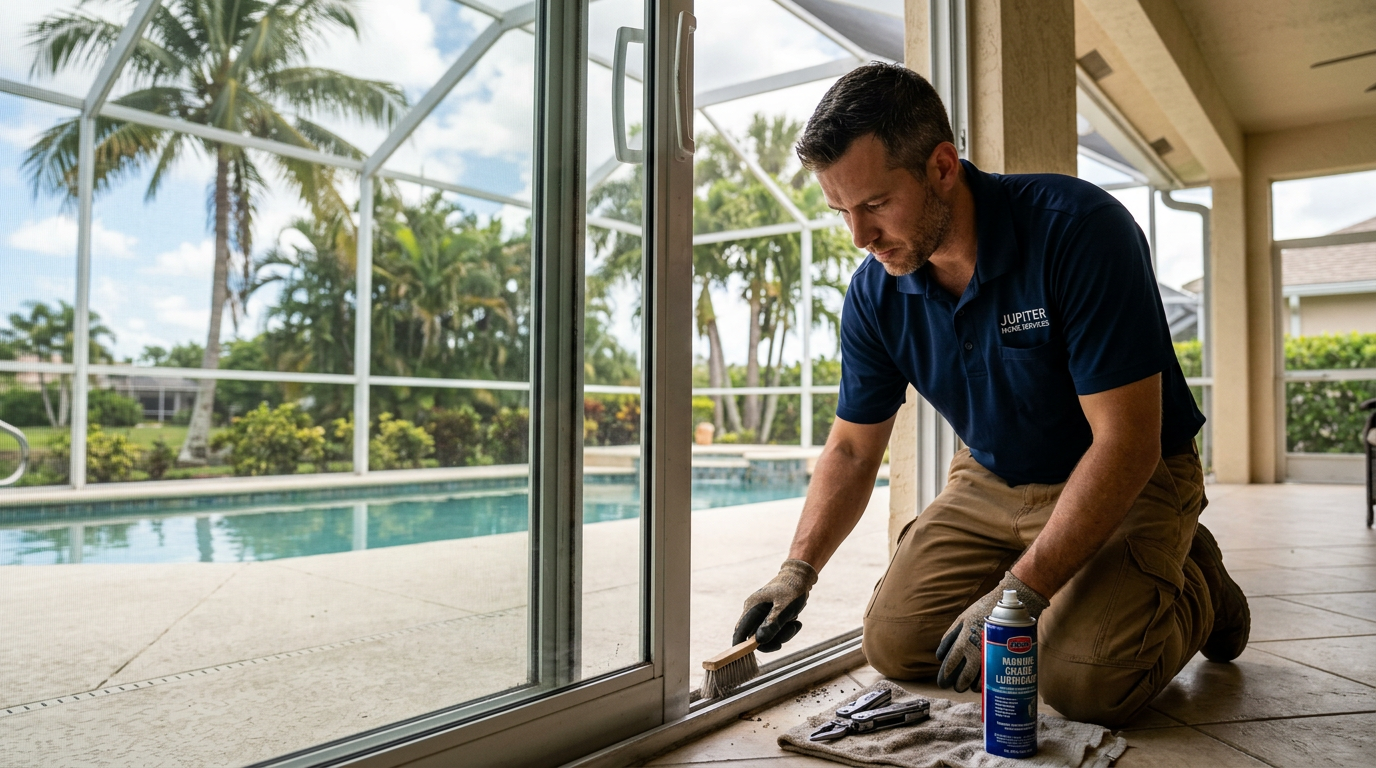
Professional sliding glass door track cleaning, roller replacement, and salt-air corrosion treatment in Jupiter, Florida typically costs between $175 and $450 per door set depending on whether stainless steel rollers or track caps are required. DIY maintenance using nylon brushes and dry silicone spray costs under $35 in materials, but neglecting salt crust buildup in coastal neighborhoods like The Bluffs or Jupiter Inlet Colony can cause severe roller seizing and track pitting, eventually requiring full frame replacements exceeding $2,500. Regular bi-monthly maintenance prevents structural track rot and extends the lifespan of heavy impact sliding doors.
Living in Jupiter means enjoying ocean breezes from Carlin Park, sunset views over the Loxahatchee River, and seamless indoor-outdoor living. However, that constant exposure to salt-laden ocean air creates a harsh environment for sliding glass door assemblies. Heavy impact doors—standard in Jupiter’s concrete block construction (CBS) homes—exert massive downward force on track assemblies. When airborne sea salt combines with humidity and windblown silica sand, it forms an abrasive, corrosive paste that grinds down aluminum tracks, rusts steel ball bearings, and destroys door seals.
Whether your home is a waterfront estate in Jonathan’s Landing, a single-family home in Abacoa, or a beachfront condo along Ocean Boulevard, understanding how to care for sliding glass door tracks after salt air exposure is essential for maintaining smooth operation and preserving home security.
Why Salt Air Destroys Jupiter Sliding Glass Door Tracks
Coastal Palm Beach County experiences relentless salt spray carry. Airborne sodium chloride particles settle directly into the stainless steel or extruded aluminum tracks of your patio sliders. When salt crystals dry, they harden into microscopic jagged ridges. Every time you open or close the door, the heavy wheels grind these crystals against the metal track, stripping away protective anodized coatings.
Once the protective coating is breached, coastal moisture fuels rapid oxidation:
- Galvanic Corrosion: Dissimilar metals—such as steel roller screws resting inside aluminum tracks—react aggressively in high-humidity salt air, producing a chalky white powder (aluminum oxide) that freezes roller assemblies.
- Bearing Seizure: Non-sealed carbon steel rollers deteriorate within 12 to 18 months near the ocean. The bearings rust solid, forcing the wheel to drag flat across the track rather than roll.
- Track Gouging: A frozen roller acts like a chisel. Dragging a 150-pound impact glass panel across a metal track cuts deep grooves into the metal, making smooth operation impossible even after installing new rollers.
- Drainage Blockages: Dust, sand, and salt paste clog the tiny weep holes at the outer base of the track system. Trapped rainwater then accelerates localized track rotting and risks interior water intrusion during tropical rainstorms.
Key takeaway: Airborne salt combined with heavy Florida impact glass will quickly destroy standard door hardware. Regular flushing of salt residues and upgrading to marine-grade stainless steel rollers are necessary steps for any Jupiter coastal property.
Identifying Early Signs of Salt Corrosion & Track Failure
Catching corrosion early prevents costly structural track rebuilds. Inspect your patio doors monthly if you live within two miles of the coast, or quarterly if you live further inland in neighborhoods like Jupiter Farms.
Common Warning Signs:
- The "Gritty Screech": A grinding or scraping noise when opening the door indicates sand and salt crystals are trapped between the roller bearings and the track floor.
- Heavy Drag & Physical Resistance: If sliding a single panel requires two hands or significant physical exertion, the roller bearings have likely rusted shut or the track surface has become severely pitted.
- White Chalky Residue: A milky, powdery buildup along the aluminum channel indicates active oxidation of the metal substrate.
- Bouncing or Jumping Panels: If the door hops along the track, the roller wheels have likely developed flat spots from being dragged while seized.
- Water Stains on Interior Trim: Wet drywall or warped baseboards near the interior threshold indicate that salt debris has blocked the exterior weep holes, forcing water back into the home.
If you notice water damage spreading to adjacent walls or drywall surfaces, combining track clearing with professional drywall repair or targeted painting services helps restore interior aesthetics before mold takes root.
2026 Coastal Door Track Repair & Maintenance Costs in Jupiter
Maintaining sliding glass door hardware in Jupiter requires localized solutions designed for high humidity and tropical storms. Below is a breakdown of typical 2026 costs for DIY and professional door track care in Palm Beach County.
| Service / Maintenance Task | Estimated Cost (DIY) | Estimated Cost (Pro Handyman) | Expected Lifespan in Coastal Zones |
|---|---|---|---|
| Basic Salt & Sand Flush + Silicone Lube | $15 – $30 | $120 – $180 | 2 – 3 Months |
| Full Track Deep Clean, Weep Hole Clearing & Adjustment | $25 – $45 | $175 – $250 | 6 Months |
| Tandem Stainless Steel Roller Replacement (Per Panel) | $40 – $90 (Parts) | $220 – $350 | 5 – 7 Years |
| Stainless Steel Track Cap / Repair Sleeve Installation | $50 – $100 (Parts) | $275 – $420 | 7 – 10 Years |
| Weatherstripping & Coastal Threshold Seal Replacement | $20 – $50 | $150 – $260 | 3 – 5 Years |
For broader home maintenance planning, reviewing professional property maintenance solutions can help schedule seasonal track care alongside routine exterior upkeep.
Step-by-Step Guide: Cleaning & Treating Door Tracks After Salt Exposure
If your door is still operating relatively smoothly but feels gritty, follow this deep-cleaning routine to remove salt deposits and stop oxidation.
Step 1: Vacuum Dry Sand and Debris
Never spray water onto a track covered in loose sand and dirt. Doing so creates mud that gets packed deep into the roller housing. Use a shop vacuum with a narrow crevice attachment to remove all dry sand, pet hair, and loose salt crust.
Step 2: Wash Away Salt Residue
Mix warm fresh water with a few drops of mild dish soap. Use a stiff-bristled nylon brush (never steel wool or wire brushes, which scratch protective anodized finishes) to scrub the track walls and center rail. For heavy white oxidation, spray a 50/50 mix of white vinegar and water to neutralize the alkaline salt deposits. Flush the track thoroughly with clean fresh water.
Step 3: Clear the Weep Holes
Locate the small rectangular drain slits along the exterior side of the outer track frame. Insert a thin zip-tie or small coat hanger wire into the slots to dislodge packed dirt, salt, and foliage. Spray water into the track channel to confirm water flows freely to the exterior patio or turf.
Step 4: Dry Completely
Use a microfiber cloth or leaf blower to dry the entire metal track assembly. Moisture trapped beneath lubricants will accelerate corrosion.
Step 5: Apply a Dry Marine Lubricant
Never use standard WD-40 Multi-Use Product or heavy petroleum grease on sliding door tracks. Petroleum lubricants act like a magnet for Florida sand and airborne salt, creating a grinding paste that destroys rollers within months.
Key takeaway: Use only high-grade dry silicone spray or PTFE (Teflon) dry-film lubricants on coastal sliding glass door tracks. These create a non-tacky moisture barrier that repels salt dust and sand.
Professional Upgrades for Jupiter Coastal Homes
Sometimes routine cleaning isn't enough to rescue a severely pitted or sticking door track. When components fail, upgrading to coastal-rated materials ensures long-term performance.
1. Heavy-Duty Stainless Steel Rollers
Standard builders-grade sliding doors often come equipped with steel or nylon rollers featuring carbon steel ball bearings. In coastal Jupiter, these break down rapidly. A professional handyman can replace them with dual-wheel tandem rollers constructed entirely of marine-grade 304 or 316 stainless steel. These offer superior weight capacity for thick impact-glass panels and resist salt corrosion.
If your sliding doors require track component swaps or hardware upgrades, engaging experienced door repair specialists ensures heavy glass panels are safely removed, aligned, and re-hung.
2. Stainless Steel Track Covers (Caps)
If drag marks or rust spots have carved divots into your aluminum rail, you don't necessarily need to replace the entire door frame. A pro technician can press-fit a custom-cut, heavy-gauge stainless steel repair cap over the existing aluminum track. This creates a fresh, ultra-smooth surface for the new rollers to glide over at a fraction of full replacement costs.
3. Integrated Exterior Deck & Threshold Maintenance
Corrosion on door tracks often extends outward to adjacent patio structures, screen enclosures, and exterior decks. Keeping the surrounding area clean with periodic pressure washing prevents accumulated salt dust from blowing back into clean door tracks.
If your door opens onto a timber or composite deck frame, keeping up with deck repair prevents wood movement or fastener popping from shifting the door frame alignment over time.
HOA Realities & Florida Building Code Considerations in Jupiter
When repairing or replacing sliding door components in Jupiter, homeowners must remain mindful of local homeowner association (HOA) rules and state building standards.
- HOA Uniformity Rules: Communities such as Abacoa, Admirals Cove, and Jonathan’s Landing maintain strict architectural guidelines regarding exterior appearance. While track maintenance and roller replacement are internal repairs that rarely require architectural review, changing exterior door handles, frame colors, or thresholds may require formal HOA approval.
- Florida Building Code & Impact Rating: If salt damage requires a full door assembly replacement, the new door system must meet current Palm Beach County wind-load and impact exposure codes (TAS 201/202/203 protocols). Replacement hardware must support heavy impact glass (often weighing 150 to 250 lbs per panel) without compromising structural integrity.
- Water Intrusion Safeguards: Proper threshold pan flashing beneath the track is required by code during replacement to prevent wind-driven rain from penetrating the interior concrete slab—a major risk during Florida hurricanes.
Protecting Your Tracks During Florida Hurricane Season
Before tropical storms roll into Jupiter, take proactive steps to prepare your sliding door tracks:
- Clear All Drain Paths: Ensure weep holes are completely open so heavy rain drains onto the exterior patio rather than backing up over the interior track barrier.
- Inspect Weather Seals: Replace worn rubber flap seals along the vertical edges of the doors. Torn seals allow pressurized salt water to enter the track assembly during high-wind events.
- Lock and Latch Check: Lubricate internal locking mechanisms with dry silicone. A sticky latch can prevent full engagement, leaving doors vulnerable to wind chatter and seal failure.
Whether you live in Jupiter, nearby Palm Beach Gardens, or coastal communities like Delray Beach, staying proactive with track maintenance keeps your home secure, dry, and effortless to operate year-round.
Get a free estimate
Is your sliding glass door sticking, screeching, or dragging across a corroded track? Let the local experts at Palm Handyman restore smooth, effortless operation to your doors. We specialize in coastal maintenance, roller replacement, and track repairs throughout Jupiter and Palm Beach County.
Call us today at (561) 299-0890 or book your service online at /book to get a free estimate.
Need a handyman in Palm Beach County?
Get a free written estimate in minutes. Same-day appointments available across PBC.
Related services
Frequently asked questions
Most jobs start at $95 for the first hour with transparent flat-rate pricing on common tasks like TV mounting ($129), ceiling fans ($149), and drywall patches ($95). You'll always get a clear quote before any work begins — no hidden fees.
Yes. We reserve same-day and next-day appointments across Boca Raton, Delray Beach, Boynton Beach, West Palm Beach, Palm Beach Gardens, Jupiter, Lake Worth, and Wellington. Call us before noon for same-day availability.
Absolutely. Palm Handyman is fully licensed in Florida and carries $2M general liability plus workers' comp on every technician. We'll send the COI directly to your HOA or property manager on request.
We cover all of Palm Beach County including Boca Raton, Delray Beach, Boynton Beach, West Palm Beach, Palm Beach Gardens, Jupiter, Lake Worth, Wellington, Palm Beach Island, Manalapan, and Highland Beach.