Jupiter TV Mounting: DIY Safety, Code Rules & Costs
Mounting a flat screen in Jupiter seems easy until concrete block walls, in-wall power code rules, and high wind ratings enter the picture. Here is what homeowners must know.
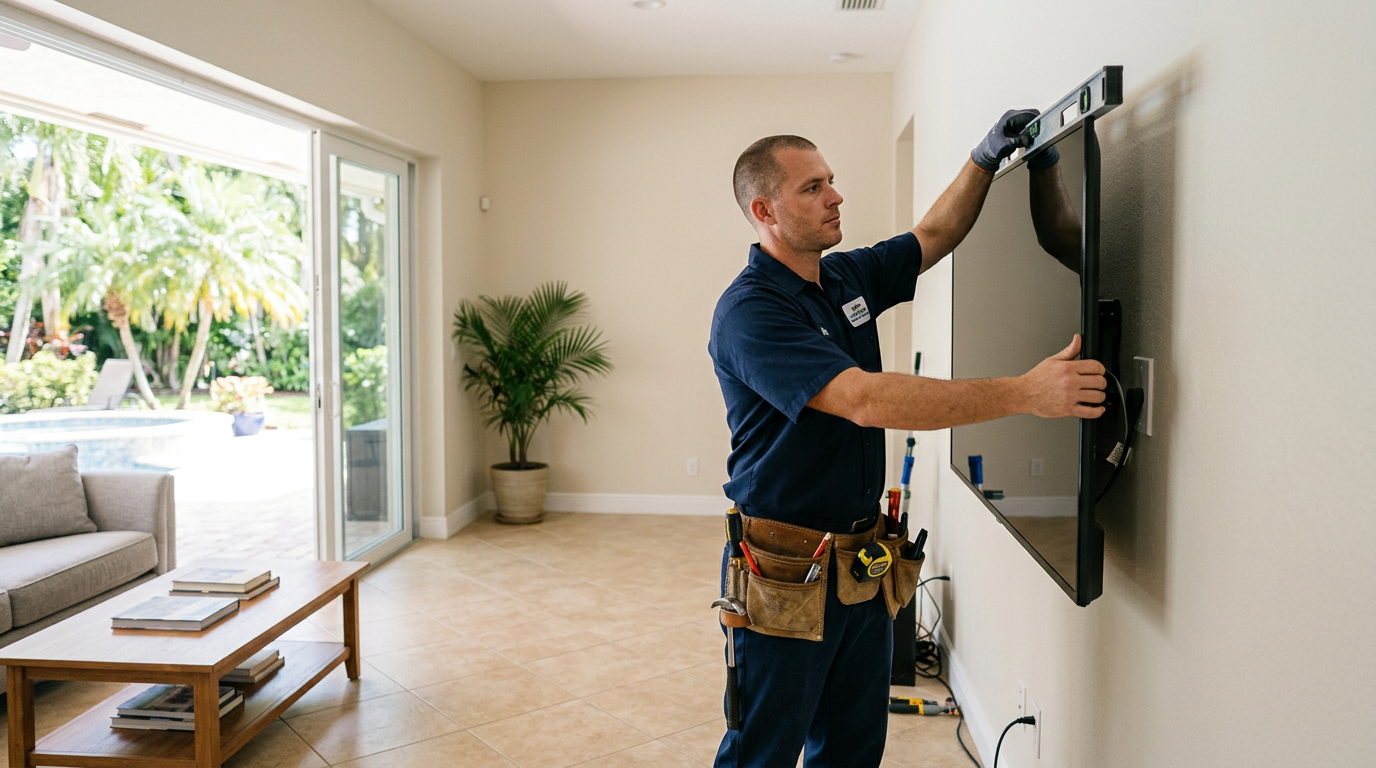
In Jupiter, Florida, professional TV mounting costs between $150 and $375 for standard installation on drywall or concrete block, while advanced setups with in-wall power concealment, soundbar integration, or masonry/tile mounting range from $325 to $650+. Handling this as a DIY project can easily lead to National Electrical Code (NEC) violations and Florida Building Code issues if flexible power cords are routed behind drywall, or if heavy displays are improperly anchored to masonry furring strips. Hiring a professional handyman in Jupiter ensures full compliance with coastal building standards, structurally secure anchoring on CBS (concrete block structure) walls, and clean, hidden wire management.
Why TV Mounting in Jupiter Is Harder Than It Looks
At first glance, hanging a 75-inch flat panel display looks like a weekend project you can finish in an hour with a tape measure and an entry-level cordless drill. However, residential construction in northern Palm Beach County presents structural and electrical quirks that make TV mounting far more technical than hanging a picture frame.
Homebuilders in Jupiter neighborhoods such as Abacoa, Egret Landing, The Shores, and Jonathan's Landing utilize heavy-duty building practices designed to withstand Atlantic hurricane conditions. On ground floors and exterior perimeter walls, these homes feature Concrete Block Structure (CBS) construction coated in exterior stucco. Inside, drywall is rarely attached directly to 2x4 wood studs along exterior walls. Instead, builders install thin 1x2-inch wood furring strips or light-gauge metal channels directly over the solid concrete block.
If you attempt a traditional DIY mounting approach using standard 2-inch wood lag bolts on a CBS wall, your drill bit will hit solid poured concrete just half an inch past the drywall face. Forcing a standard bolt into masonry without proper pilot holes or using standard plastic drywall anchors on a heavy tilt-mount or full-motion arm will eventually result in the fasteners pulling free, dropping thousands of dollars in electronics onto your floor and severely tearing your drywall.
Key takeaway: Exterior perimeter walls in Jupiter homes are almost universally built with concrete block (CBS) lined with thin furring strips. Standard drywall anchors and wood lag screws will fail on these surfaces, requiring concrete-rated toggle anchors or Tapcon masonry fasteners.
The Electrical Code Trap: Hidden Cords & Fire Hazards
The most common DIY mistake in home theater setup is routing the TV’s factory power cord directly through two small holes in the drywall to hide it behind the wall. While this creates a sleek, cord-free aesthetic, it is a direct violation of National Electrical Code (NEC) Section 400.12, which strictly prohibits running flexible power cords or non-metallic extensions through holes in walls, ceilings, floors, or behind building surfaces.
Flexible TV power cables lack the thick, flame-retardant outer jacketing of solid-core electrical wire (like NM-B Romex). Inside a wall cavity, a flexible cord can chafe against metal studs, get pinched by mounting hardware, or overheat without adequate heat dissipation. If an electrical fire occurs inside the wall cavity, insurance adjusters in Palm Beach County can deny claims if the cause is traced to unpermitted or non-code-compliant wiring.
To achieve a clean, hidden-wire look legally under Florida Building Code, you have two code-compliant choices:
- Bridge Power Kits: Install an ETL-listed or UL-listed in-wall power extension kit. These pre-wired modules use code-compliant Romex wire between an upper recessed receptacle behind the TV and a lower inlet plug near your baseboard outlet.
- Dedicated Outlet Installation: Install a standard recessed electrical junction box wired into your home’s existing electrical circuit.
If you are already upgrading your media area, combining TV Mounting with minor electrical adjustments or even Light Fixture Installation ensures that power distribution, surge protection, and circuit capacity are handled safely by licensed, insured professionals.
Structural Anchoring: Matching Mounts to Jupiter Construction Types
Not all walls in Jupiter are constructed identically, and matching your mount hardware to the underlying structure is critical for long-term safety.
Interior Wood Stud Walls
On interior partition walls—such as those dividing rooms in single-family homes in Indian Creek or Paseos—drywall is mounted over traditional 2x4 or 2x6 wood framing spaced 16 inches on center. DIYers must use a dependable stud finder to locate the exact center of the stud. Screwing a lag bolt into the outer edge of a wood stud can split the wood, reducing its weight rating by up to 80%.
Metal Studs in Condos & High-Rises
If you reside in a oceanfront condominium along Beach Road or an apartment complex near the Jupiter Inlet, your interior walls are likely constructed with interior steel framing studs. Wood lag screws will not grip thin-gauge steel studs. Mounting a TV to metal studs requires specialized heavy-duty snap-toggle anchors (like Toggler Snaptoggles) rated for hollow walls, or backing plates that distribute weight across multiple metal members.
Solid Masonry and CBS Walls
When mounting onto concrete block or poured concrete, standard wood screws are useless. Installers must use heavy-duty masonry anchors, such as sleeve anchors or heavy Tapcons, drilled into solid concrete using a hammer drill and specialized carbide-tipped masonry bits. Avoid setting anchors into hollow cinder block voids or mortar joints, which lack structural shear strength.
Key takeaway: Never use plastic expansion anchors or hollow drywall wall-anchors for heavy full-motion TV mounts. A full-motion arm extended 24 inches creates intense cantilever leverage, amplifying a 65-pound TV's pulling force to over 200 pounds of tension on the top anchors.
Outdoor Lanai TV Mounting: Salt Air, Moisture & Wind
Outdoor living is a central feature of northern Palm Beach County life, and mounting an outdoor television on a covered patio or lanai is extremely popular in communities like Jupiter Farms and Rialto. However, exterior mounting introduces environmental hazards that quickly destroy indoor equipment and mounts.
Coastal air in Jupiter carries airborne salt particles from the Atlantic Ocean and the Loxahatchee River, accelerating oxidation on standard carbon-steel hardware. Within 6 to 12 months, a standard indoor steel bracket mounted outdoors will rust, lock up, and bleed orange rust stains down your exterior stucco walls.
When installing a patio TV in Jupiter, adhere to these professional guidelines:
- Use Stainless Steel or Powder-Coated Hardware: Always select marine-grade or weather-resistant stainless steel mounting brackets rated for outdoor exposure.
- Select Outdoor-Rated Displays or Enclosures: Standard indoor TVs lack sealed internal components and will suffer short circuits from Florida humidity and condensation.
- Ensure GFCI Protection: Outdoor electrical receptacles must be connected to a Ground Fault Circuit Interrupter (GFCI) outlet to protect against electrical shock in wet environments.
- Inspect Exterior Sealants: Any penetration through exterior stucco or siding must be sealed with high-grade elastomeric silicone sealant to prevent rainwater intrusion into your home's structural framing.
HOA Guidelines & Condo Rules in Jupiter
Before picking up a drill, Jupiter homeowners and renters must account for local property rules. Homeowners Associations (HOAs) in master-planned neighborhoods like Abacoa or Jupiter Country Club frequently regulate exterior modifications, including outdoor patio TV placements visible from common areas or golf courses.
For condo dwellers along A1A, building management rules are even stricter. Most Jupiter condominium boards require advance notice, designated work hours (typically 9:00 AM to 5:00 PM on weekdays), and written proof of contractor liability insurance before any drilling can take place. Furthermore, penetrating firewall shared partitions between units without proper fire-stop sealant can result in substantial HOA fines and mandatory restoration costs.
If a DIY project goes sideways and damages shared wall structures or internal plumbing lines, fixing the damage will require professional Drywall Repair and texture matching (such as knock-down or orange peel finishes popular throughout local homes).
2026 Cost Comparison: DIY vs. Professional TV Mounting in Jupiter
Below is a detailed breakdown of realistic 2026 costs in Jupiter, contrasting the expenses and risks of a DIY installation against professional handyman service.
| Service / Project Scope | Estimated DIY Cost | Professional Handyman Cost | Key Code & Safety Risk Factors |
|---|---|---|---|
| Basic Drywall Mount (Up to 55") | $30 – $70 (Mount hardware only) | $150 – $225 | Stripped wood studs, off-center placement, unanchored drywall pull-out |
| CBS / Concrete Wall Mount (55" – 85") | $60 – $120 (Mount + carbide bits & anchors) | $220 – $325 | Cracking stucco/masonry, anchor pull-out from hollow block voids |
| In-Wall Power Concealment Kit | $50 – $90 (UL kit hardware) | $150 – $250 (as add-on) | NEC 400.12 code violation if cord is misrouted; fire hazard |
| Outdoor Lanai / Patio Mount | $120 – $220 (Weather-resistant mount) | $275 – $425 | Salt-air corrosion, GFCI non-compliance, water intrusion through stucco |
| Full Motion Arm on Metal Studs (Condos) | $70 – $130 (Specialized toggles & mount) | $225 – $350 | Wall collapse due to poor toggle anchoring; HOA violation |
If your project requires broader updates around your home, such as updating hardware, mounting art, or handling general Property Maintenance, bundling these tasks during a single service call maximizes value and ensures every repair is completed up to local standards. Homeowners in neighboring communities like Palm Beach Gardens and West Palm Beach face identical coastal code and concrete construction conditions.
The Honest Line: When to DIY vs. When to Call a Pro
To decide whether to grab your toolkit or call a professional, evaluate your project against this checklist:
Safe for DIY:
- Mounting a small display (under 43 inches) on an interior drywall wall with clear wood studs.
- Using an external wire cover track (raceway) glued to the wall surface rather than cutting into drywall.
- You already own a stud finder, level, and impact driver, and have experience locating stud centers accurately.
Call a Professional Handyman:
- The wall is CBS concrete, stucco, or brick, requiring heavy-duty masonry anchors and hammer drills.
- You live in a condo with metal studs or strict HOA contractor insurance requirements.
- You want wire concealment hidden inside the wall cavity safely and in compliance with NEC codes.
- The TV is 65 inches or larger, or utilizes an articulating full-motion cantilever bracket.
- You are mounting outdoors on a lanai, pool deck, or exterior wall subject to moisture and ocean air.
By choosing a professional handyman service, you protect your home's structural integrity, avoid costly electrical safety violations, and guarantee that your high-value entertainment equipment stays securely anchored for years to come.
Get a free estimate
Need a safe, code-compliant TV mount or home repair in Jupiter? Contact Palm Handyman today for expert, insured service tailored to local coastal construction. Call us directly at (561) 299-0890 or book your appointment online at /book.
Need a handyman in Palm Beach County?
Get a free written estimate in minutes. Same-day appointments available across PBC.
Related services
Frequently asked questions
Most jobs start at $95 for the first hour with transparent flat-rate pricing on common tasks like TV mounting ($129), ceiling fans ($149), and drywall patches ($95). You'll always get a clear quote before any work begins — no hidden fees.
Yes. We reserve same-day and next-day appointments across Boca Raton, Delray Beach, Boynton Beach, West Palm Beach, Palm Beach Gardens, Jupiter, Lake Worth, and Wellington. Call us before noon for same-day availability.
Absolutely. Palm Handyman is fully licensed in Florida and carries $2M general liability plus workers' comp on every technician. We'll send the COI directly to your HOA or property manager on request.
We cover all of Palm Beach County including Boca Raton, Delray Beach, Boynton Beach, West Palm Beach, Palm Beach Gardens, Jupiter, Lake Worth, Wellington, Palm Beach Island, Manalapan, and Highland Beach.