West Palm Beach DIY Electrical vs Pro: Codes, Costs & Safety
Wondering what electrical work you can DIY in West Palm Beach? Discover local code limits, HOA risks, and realistic 2026 costs before starting.
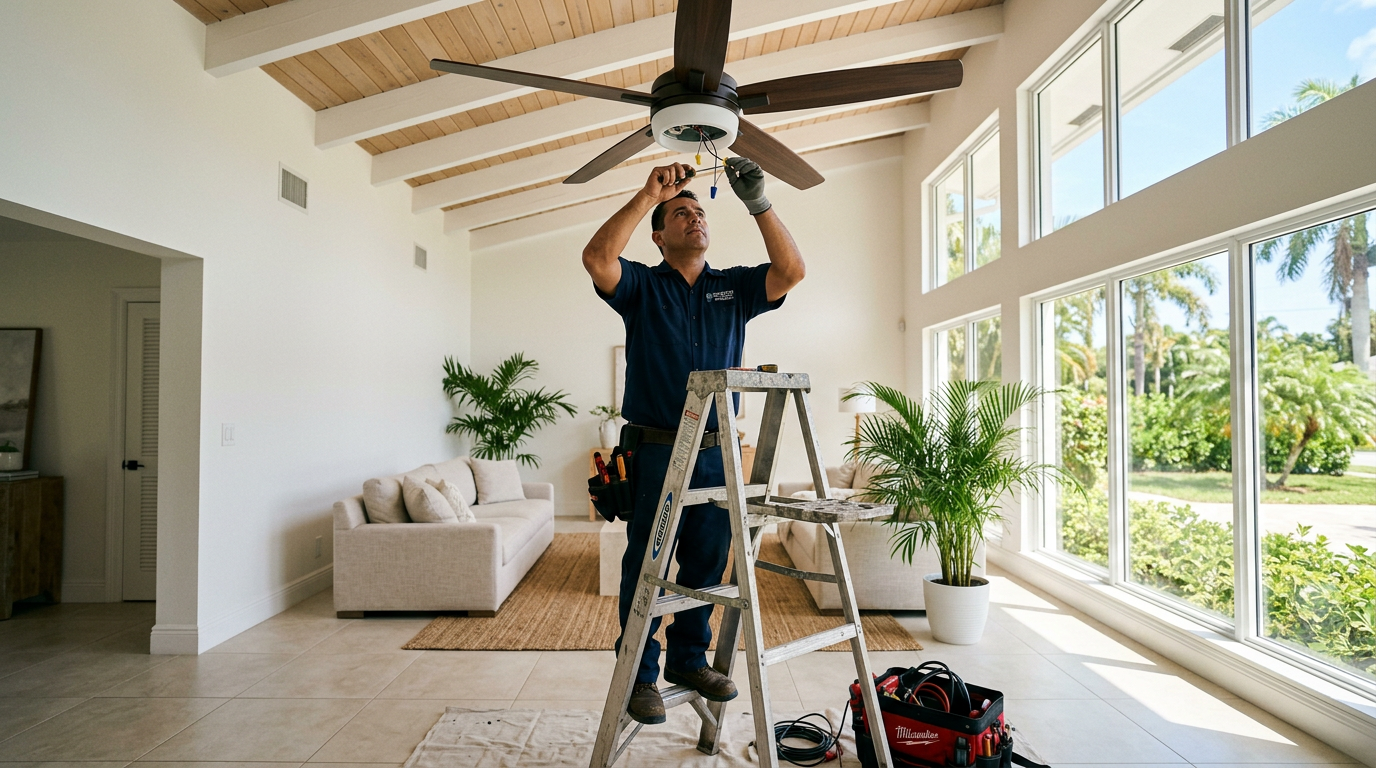
In West Palm Beach, minor electrical tasks like replacing an existing light fixture or swapping out standard switches typically cost between $120 and $280, while complex line extensions, dedicated 240V circuits, or main breaker panel upgrades range from $1,200 to $3,800 depending on permit fees and concrete wall access. Attempting high-voltage DIY electrical repairs in Palm Beach County without professional experience frequently violates the Florida Building Code, invalidates home insurance coverage, and creates severe fire hazards in coastal structures. For routine home lighting updates, scheduling a qualified handyman for professional light fixture installation or basic device replacement guarantees your home stays safe, functional, and fully compliant with local regulations.
The Boundary Between Safe DIY and Professional Electrical Work in West Palm Beach
West Palm Beach features a diverse architectural landscape. Historic homes built in the 1920s throughout El Cid, Flamingo Park, and Grandview Heights showcase unique charm alongside aging electrical infrastructure like knob-and-tube remnants or ungrounded cloth-insulated wiring. In contrast, modern developments in Ibis Golf & Country Club or multi-family properties along the Intracoastal exhibit concrete block construction (CBS), stucco facades, and modern metallic conduit systems.
Every structural style in South Florida presents specific mechanical challenges. Unlike northern wood-frame construction where wires run freely through soft pine studs, CBS homes rely on exterior concrete blocks lined with shallow wood furring strips. Electrical lines inside these walls run through rigid electrical metallic tubing (EMT) or flexible conduit embedded in concrete or squeezed tightly behind drywall. Drilling blindly into a wall to install a floating shelf, TV mount, or outlet box in a West Palm Beach home risks puncturing live conduit or severing hidden wiring.
In addition to structural complexities, West Palm Beach homeowners contend with relentless environmental factors. Atmospheric salt air from the Atlantic Ocean accelerates metal oxidation. Combined with intense ambient humidity, unsealed junction boxes and exposed copper splices corrode rapidly. Oxidized wires generate high resistance, leading to overheating circuits and arc faults. Knowing where simple home maintenance ends and professional intervention begins is critical for preserving home safety across West Palm Beach.
4 Electrical Projects Homeowners Should Never Touch
1. Main Service Panels and Subpanels
Your home's electrical panel distributes primary power throughout your living space. Replacing main circuit breakers, adding 240V subpanels, or upgrading a 100-amp service to a 200-amp service exposes you to bare main service lugs that remain continuously energized even when individual breakers are switched off. In the City of West Palm Beach, modifying main electrical panels requires formal plan review, permits from the Construction Services Department, and strict adherence to Chapter 27 of the Florida Building Code (which incorporates the National Electrical Code). Working inside panel boxes without specialized personal protective equipment and insulated tools carries lethal electrical shock risks.
2. Wet-Zone Wiring in Kitchens and Bathrooms
Water and electricity create immediate hazard zones. Florida code mandates Ground Fault Circuit Interrupter (GFCI) protection across all circuits serving kitchens, bathrooms, garages, outdoor spaces, and any location within six feet of a water source. Retrofitting GFCI receptacles in older SoCo (South of Southern) or Northwood Village homes often uncovers legacy wiring issues, such as shared neutral conductors or missing ground paths, which cause immediate circuit tripping. Tackling wet-zone wiring during home upgrades, such as extensive bathroom repairs or detailed kitchen repairs, requires precise load calculation, correct wire gauge selection, and weather-resistant junction enclosures.
3. Running New Lines Through Concrete Block Walls
Adding new power outlets or moving light switches along exterior CBS walls demands specialized tools and techniques. Cutting into concrete block or chasing furring channels without damaging structural integrity requires masonry equipment, specialized protective sleeves, and proper cable restraint. Wire staples driven too deep into tight furring channels can pinch Romex insulation, causing immediate short circuits. Furthermore, penetrating exterior concrete or vapor barriers without proper sealant allows humid coastal air to leak behind your drywall, promoting concealed mold growth.
4. Dedicated High-Amperage Circuits
Installing dedicated lines for electric vehicle chargers, hot tubs, high-efficiency HVAC units, or tankless water heaters demands heavy-gauge copper wiring (such as 6 AWG or 4 AWG). Miscalculating wire size relative to circuit length and amperage load creates dangerous heat buildup along the wire length inside your walls long before a breaker trips. Licensed technicians ensure voltage drop calculations, breaker sizing, and terminal torque specs meet exact manufacturer standards.
Key takeaway: Under the Florida Building Code, any project that involves running new circuit wiring, modifying main panels, or altering concrete structural walls requires strict compliance, proper wire sizing, and formal municipal oversight. Never attempt high-voltage DIY installations on CBS structures or panel interiors.
Florida Building Code, Permits, and HOA Realities
Home maintenance in Palm Beach County involves navigating three distinct oversight layers: state codes, municipal permit offices, and local Homeowners Associations (HOAs).
The Realities of Unpermitted Work
When selling property in West Palm Beach, buyer home inspectors routinely scrutinize electrical service boxes, outlet polarity, and wiring methods. Discovered unpermitted work—such as loose Romex stapled to garage rafters, missing GFCI receptacles, or unpermitted subpanels—frequently stalls real estate closings until a licensed contractor remedies the work and obtains retroactive city approvals. More critically, if unpermitted DIY wiring causes an electrical fire, insurance carriers can deny your claim under policy clauses that exclude damage caused by unpermitted structural or electrical alterations.
HOA Architectural Review Committees (ARC)
For residents living in gated communities across West Palm Beach, HOA regulations govern exterior alterations. Exterior security lights, coach lamps, ceiling fans on screened lanais, and outdoor kitchen power connections usually require ARC approval before work begins. HOAs frequently require proof of liability insurance and worker's compensation coverage from any contractor before granting access through security gates.
2026 West Palm Beach Electrical & Fixture Cost Guide
Understanding realistic regional pricing helps you budget effectively while determining whether a job warrants hiring a professional. Below is a detailed cost guide for common home electrical services in West Palm Beach:
| Task / Service | DIY Risk Level | Estimated Pro Cost (2026) | Permit Required? |
|---|---|---|---|
| Swapping outlet or switch wall plates | Very Low | $75 - $150 (visit minimum) | No |
| Replacing existing light fixture (like-for-like) | Low-Medium | $120 - $250 | No |
| Standard ceiling fan installation (existing box) | Medium | $150 - $320 | No |
| Installing new fan with box brace & rewiring | High | $300 - $550 | Sometimes (if new line) |
| GFCI receptacle upgrade (kitchen/bath) | Medium | $120 - $220 | No |
| New circuit installation in CBS wall | High | $450 - $950 | Yes |
| Dedicated 240V EV Charger installation | High / Pro Only | $800 - $1,800 | Yes |
| 200-Amp Main Service Panel replacement | Extreme / Pro Only | $2,200 - $4,200 | Yes |
Safe DIY Electrical Tasks You Can Handle
While high-voltage projects demand professional tools and training, homeowners can safely perform minor cosmetic upgrades provided essential safety steps are followed:
- Replacing Cover Plates: Installing modern, decorative wall plates over existing outlets and light switches is entirely safe as long as terminal screws remain untouched.
- Installing Plug-In Smart Accessories: Setting up smart plugs, Wi-Fi lamps, or battery-operated video doorbells involves zero direct contact with household high-voltage wiring.
- Resetting Tripped Circuit Breakers: Flipping a tripped circuit breaker firmly to the "OFF" position and back to "ON" is safe. If a breaker immediately trips again, stop resetting it—this indicates a direct short circuit or thermal overload that requires diagnostic tools.
- Testing GFCI Outlets: Monthly testing of kitchen and bathroom GFCI outlets using built-in "Test" and "Reset" buttons confirms internal safety mechanisms are operating correctly.
Key takeaway: If a task requires handling bare copper conductors, cutting into concrete block, working inside energized panel boxes, or installing heavy ceiling braces, stop immediately and hire a professional handyman or electrical specialist.
Local Expertise Across West Palm Beach
Whether you need help updating decorative light fixtures in a historic Downtown West Palm Beach apartment, mounting outdoor ceiling fans in Wellington, or replacing damaged outlets in Lake Worth, maintaining code compliance keeps your family safe and preserves your property value. Palm Handyman delivers dependable, clean, and fully insured small-project handyman services across Palm Beach County.
Get a free estimate
Need assistance upgrading fixtures, mounting ceiling fans, or completing general home maintenance in West Palm Beach? Call Palm Handyman today at (561) 299-0890 or request your free project estimate online at /book.
Need a handyman in Palm Beach County?
Get a free written estimate in minutes. Same-day appointments available across PBC.
Related services
Frequently asked questions
Most jobs start at $95 for the first hour with transparent flat-rate pricing on common tasks like TV mounting ($129), ceiling fans ($149), and drywall patches ($95). You'll always get a clear quote before any work begins — no hidden fees.
Yes. We reserve same-day and next-day appointments across Boca Raton, Delray Beach, Boynton Beach, West Palm Beach, Palm Beach Gardens, Jupiter, Lake Worth, and Wellington. Call us before noon for same-day availability.
Absolutely. Palm Handyman is fully licensed in Florida and carries $2M general liability plus workers' comp on every technician. We'll send the COI directly to your HOA or property manager on request.
We cover all of Palm Beach County including Boca Raton, Delray Beach, Boynton Beach, West Palm Beach, Palm Beach Gardens, Jupiter, Lake Worth, Wellington, Palm Beach Island, Manalapan, and Highland Beach.